PART 1
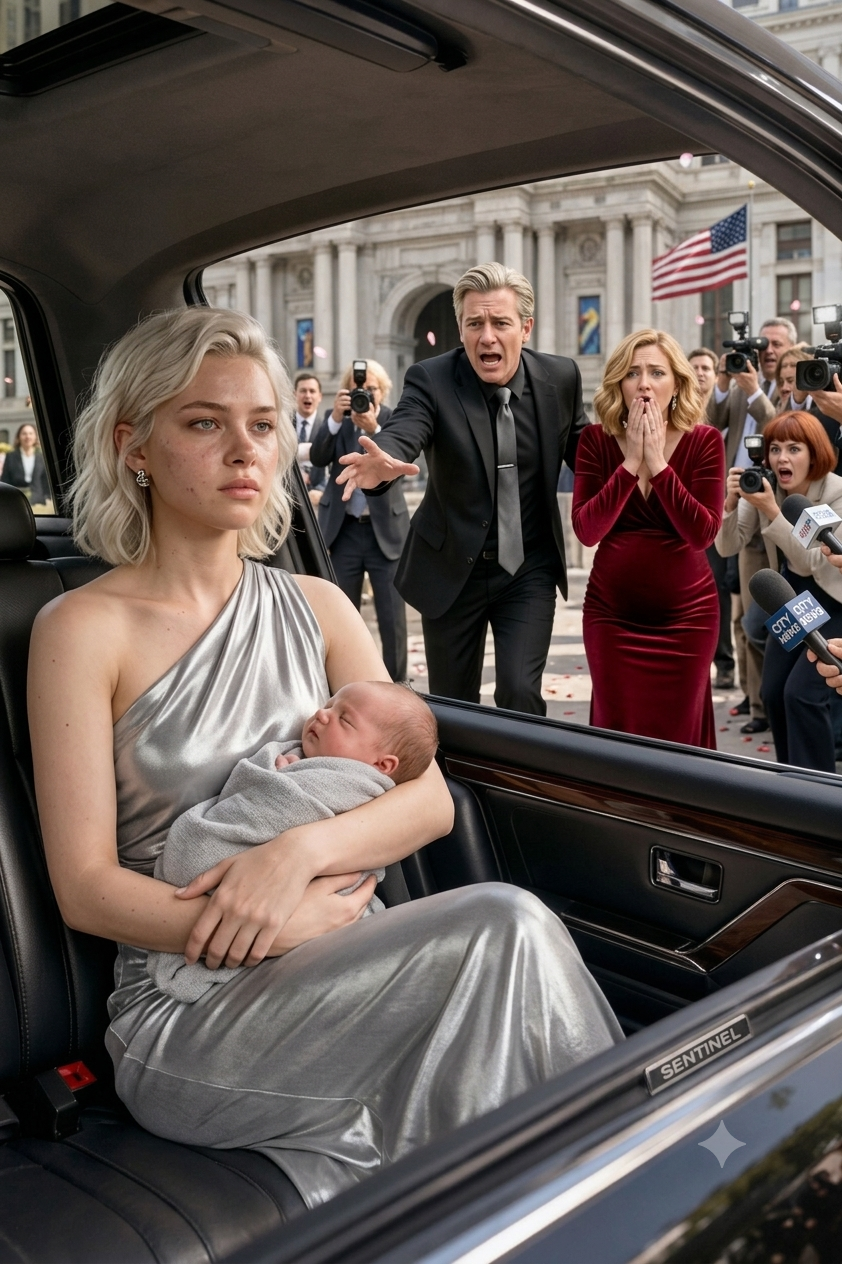
At 12:18 AM, Lucía arrived at her mother’s house, the baby clinging to her chest, a half-closed backpack dangling from her shoulder, and her eyes swollen from crying.
She wasn’t wearing a jacket.
She had no money.
She only carried the brutal certainty that her husband, Daniel, had cheated on her with another woman.
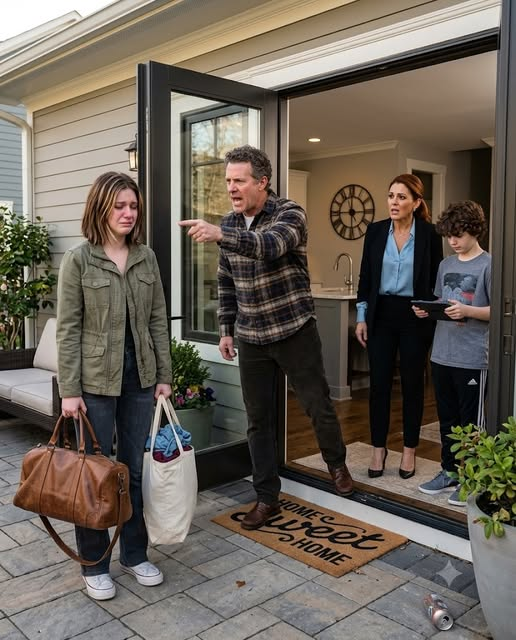
Doña Elvira, her mother, opened the door just a crack.
She saw the sleeping child, the wrinkled pajamas on Lucía, the suitcase on the floor... and instead of hugging her, she pressed her lips together.
“A good wife endures,” she said, coldly. “I don’t want scandals or shame in my house.”
Lucía managed to say:
“Mom, please...”
But the door slammed shut in her face.
The blow sounded louder than any insult.
In the Portales neighborhood, the streets were almost empty. A taxi passed but didn’t stop. Lucía dialed two friends, but no one answered. The baby stirred in her arms, let out a whimper, and she felt something inside her break.
She didn’t want to go to her mother-in-law’s.
Of all the doors in the world, that was the last one she should knock on.
Doña Mercedes was Daniel’s mother. The mother of the man who had just shattered her with a hastily deleted message, a photo in a Tlalpan hotel, and a name that wouldn’t leave her mind: Valeria.
But her feet moved on their own.
Doña Mercedes’ house was seven blocks away. A green facade, geranium pots, a Virgin of Guadalupe next to the door, and the smell of soup wafting from the sidewalk.
Lucía knocked once.
Doña Mercedes opened before the second knock, as if she had been waiting.
She wore slippers, an apron dusted with flour, and her hair pulled up with an old clip.
She didn’t ask what had happened.
She didn’t ask where Daniel was.
She simply opened the door wider.
“Come in, dear. And bring the baby, no one gets left outside.”
Lucía entered trembling.
They sat her down in the kitchen. They served her noodle soup with zucchini, lemonade, and a hot tortilla.
For two days, no one had asked her if she had eaten.
And when Doña Mercedes said, “Eat a little, even if it’s for the baby,” Lucía bent over the table and cried silently.
Then she was taken to the back room.
The bed was made.
There were clean towels.
And by the window, a crib was set up, with a blue blanket folded at the edge.
“How lucky I am to have this,” Lucía murmured, trying to smile.
Doña Mercedes didn’t smile.
“I always have it ready,” she replied.
Lucía didn’t understand.
But she was so tired that she didn’t ask.
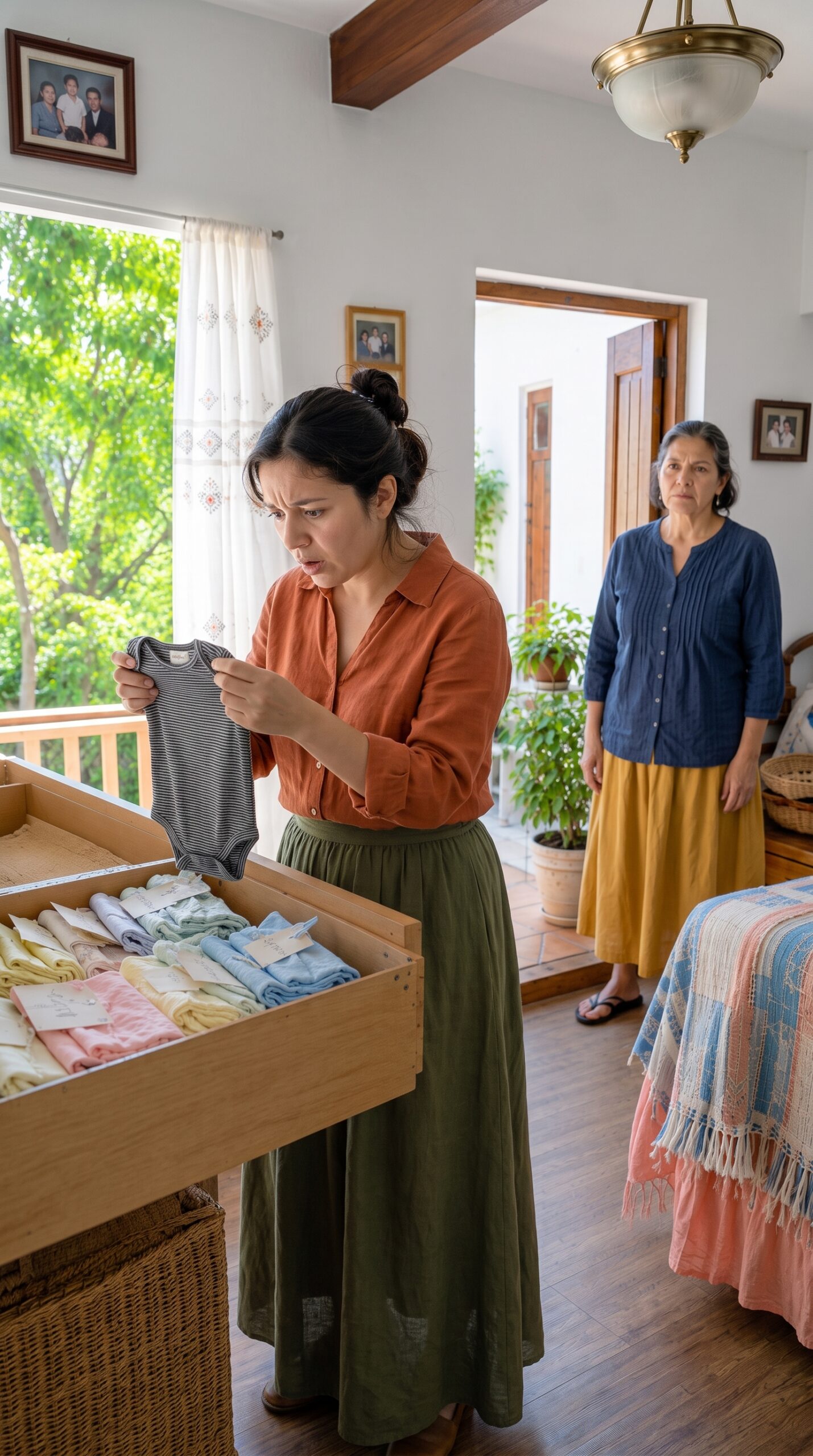
The next day, while looking for diapers in the nightstand, she found a drawer full of baby clothes.
It wasn’t her son’s clothing.
There were tiny dresses, pink rompers, yellow hats, and lace-trimmed socks. All folded with excessive care.
“That’s not yours,” Doña Mercedes said from the doorway.
Lucía jumped.
The woman closed the drawer calmly, but her eyes were strange. Not angry. Scared.
That afternoon, Lucía finally told about the message.
“Her name is Valeria,” she said. “Daniel wrote to her that he was with me only for the baby.”
Doña Mercedes continued chopping tomatoes.
She wasn’t surprised.
“Valeria,” she repeated softly. “Uh-huh.”
Lucía looked up.
“Do you know her?”
The mother-in-law took too long to answer.
“I know many names, dear.”
That night, Lucía couldn’t sleep.
She got up for water and saw light in the kitchen.
Doña Mercedes was sitting at the table, writing in an old notebook. When she saw Lucía enter, she quickly closed it.
But Lucía managed to read a name on the page.
“Maribel.”
And a date from five years ago.
The next morning, there was a knock at the door.
Lucía was in her robe, carrying her baby.
Doña Mercedes opened it.
It was Daniel.
He brought flowers, his shirt wrinkled, and that face of a man who thinks saying “I’m sorry” erases everything.
But he wasn’t there for Lucía.
“Mom, I’m here for Valeria,” he said. “She told me you sent her here.”
Lucía’s blood ran cold.
Behind him, on the sidewalk, was a young girl with a broken suitcase and a newborn baby in her arms.
“Is this Doña Mercedes’ house?” Valeria asked, her voice barely audible. “I was told they open here.”
Lucía looked at her mother-in-law.
Doña Mercedes didn’t blink.
She shut the door in Daniel’s face.
Then she opened it again.
Not for him.
For Valeria.
“Come in, dear,” she said in the same voice. “And bring the baby, no one gets left outside.”
PART 2
Lucía felt the world turn upside down.
For one second, she thought Doña Mercedes was defending her. That she had closed the door on Daniel because she was a just woman, because she wouldn’t allow another humiliation.
But the phrase was the same.
Exactly the same.
The same words.
The same soup on the stove.
The same crib ready before anyone announced anything.
Lucía left her baby on the bed and walked to the back room with her heart pounding in her ears.
She opened the drawer Doña Mercedes had forbidden her to touch.
This time she didn’t stop.
She pulled out the girl’s clothes.
Underneath were more clothes. For a boy. For a newborn. For three months. For six months.
Each pile had a little note pinned with a safety pin.
“Maribel.”
“Rocío.”
“Sandra.”
“Paty.”
“Fernanda.”
Different dates.
Different years.
And at the bottom, in a separate space as if it were already waiting for ownership, was a new blue outfit, the exact size for her son.
The note said:
“Lucía.”
She had to sit on the floor.
She didn’t cry.
She didn’t scream.
The fear was so great that she couldn’t even breathe.
Then she understood why Doña Mercedes had opened so quickly that night.
Why the soup was already hot.
Why the crib was already set up.
Why she wasn’t surprised to hear Valeria’s name.
Daniel hadn’t just broken Lucía.
Daniel had been breaking women for years.
And his mother was keeping them one by one in that house.
When Lucía stepped into the hallway with the note clenched in her fist, she found Doña Mercedes trying to close the gate. Daniel was shouting from the sidewalk.
“Mom, don’t get involved! That woman is taking advantage!”
Valeria was sitting in the kitchen, pale, with her baby crying against her chest.
Doña Mercedes didn’t respond.
Her back was straight, but her hands trembled so much that she couldn’t latch the bolt.
Lucía stared at her.
A wicked woman wouldn’t tremble like that.
A woman who enjoyed the secret wouldn’t seem like she was about to fall apart.
“How many are we?” Lucía asked.
Doña Mercedes closed her eyes.
Daniel knocked on the door again.
“Lucía, open! Don’t make a scene, seriously! You’re my wife!”
She didn’t move.
“How many?” she repeated.
Doña Mercedes finally locked the bolt and leaned against the door.
“You saw the drawer,” she said wearily. “Now you have to see the notebook.”
She took her to the bedroom.
She pulled out the entire drawer and placed it on the bed.
Then she lifted the clothes from the bottom and pulled out a brown-covered notebook, stained with coffee and kitchen grease.
Lucía opened it with fear.
She expected to find something horrible.
Photos.
Gossip.
Threats.
But there were only names and addresses.
“Rocío: lives in Querétaro, works in a pharmacy, her child just entered kindergarten.”
“Sandra: opened a quesadilla stand in Iztapalapa, doesn’t want Daniel to know.”
“Paty: went with her aunt to Veracruz, sends a message every December.”
“Fernanda: finished open high school.”
Lucía turned the pages slowly.
They weren’t trophies.
They were traces.
Women who had come broken and had left alive.
“I don’t keep them, dear,” Doña Mercedes said, sitting on the edge of the bed. “I help them leave.”
Lucía looked at her, confused.
“Then why did you have my name written?”
“Because Daniel started again.”
The sentence fell heavy.
Doña Mercedes rubbed her knees, as if it hurt her to say each word.
“I know my son. I know his tricks. When he starts with the phone face down, when he showers twice before going out, when he arrives smelling of perfume that isn’t his... I already know.”
Lucía tightened the note.
“And why didn’t you warn me?”
The mother-in-law lowered her gaze.
“Because no one believes a mother-in-law when she speaks ill of her son. Because I thought maybe this time I was wrong. Because a mother, even if it embarrasses her to say it, always wants to believe that her son isn’t that bad.”
Lucía let out a bitter laugh.
“Well, he is.”
“Yes,” Doña Mercedes admitted. “And it’s also my fault.”
Outside, Daniel was still shouting, but growing fainter. A neighbor had likely told him to quiet down or they’d call the police.
In the kitchen, Valeria was trying to calm her baby. She repeated, “It’s okay, my love, it’s okay,” in the broken voice of a woman who doesn’t know where she’ll sleep.
Doña Mercedes opened the notebook to the first page.
There was the name Lucía had seen the night before.
“Maribel.”
But there was no address next to it.
Just a date.
And a cross.
Lucía stopped breathing for a moment.
“Who was she?”
Doña Mercedes stared at the name.
For a long while, she didn’t speak.
When she finally did, her voice no longer sounded sweet. It sounded old.
“Daniel’s first wife.”
Lucía felt a blow to her chest.
“Daniel told me he hadn’t married before me.”
“Of course he said that,” the mother-in-law replied. “He told Sandra that too. And Paty. And he told you that Valeria was a co-worker.”
Lucía covered her mouth with her hand.
“What happened to Maribel?”
Doña Mercedes folded the apron between her fingers.
“What almost happened to you.”
The room seemed to shrink.
The woman took a deep breath.
“Daniel cheated on her when she was eight months pregnant. He kicked her out of an apartment in Doctores because he found messages. She called me crying. She said she had nowhere to go.”
Lucía didn’t want to listen, but she couldn’t stop her.
“I told her to endure. That men are foolish. That with a child, they change. I told her the same nonsense your mom told you.”
Doña Mercedes covered her face with one hand.
“Three days later, I knew she had slept in the bus station with the newborn. She got sick. Maribel didn’t survive.”
The silence was so loud that even Valeria’s baby’s cries seemed distant.
“The baby lived,” Doña Mercedes continued. “A cousin took her to Zacatecas. They never let me get close. And they were right. I didn’t open the door in time.”
Lucía looked at the drawer.
The clothes.
The dates.
The names.
Everything changed shape.
It no longer seemed like a trap.
It felt like a penance.
Doña Mercedes pulled out a tiny yellow dress from the bottom, carefully folded.
“This was for Maribel’s daughter,” she said. “I bought it when it was already too late. I’ve kept it since then to remind myself not to wait again.”
Lucía felt the anger against her mother-in-law shatter into something more uncomfortable.
It wasn’t forgiveness.
Not yet.
It was understanding.
A strange, painful thing, like swallowing a thorn.
“So every time Daniel does the same...”
“I prepare the room,” Doña Mercedes replied. “I make soup. I wash clothes. I set up the crib. I pray to be wrong. But when they knock, I open.”
Lucía sat next to her.
For the first time since she arrived, she looked at Doña Mercedes not as a mother-in-law, but as a woman.
An old woman.
Tired.
Carrying a guilt longer than her own marriage.
At that moment, Valeria appeared in the doorway of the room.
Her eyes were red, and the baby was asleep in her arms.
“Sorry,” she said. “I didn’t know Daniel was married. He told me you had left him.”
Lucía slowly stood up.
The other girl seemed as lost as she had the night before.
She didn’t look like a triumphant mistress.
She looked like an abandoned girl.
“Does your mom know?” Lucía asked.
Valeria swallowed hard.
“She told me not to come back with a bastard.”
The word fell like a slap.
Doña Mercedes closed her eyes.
It was the same story.
With a different face.
Different baby.
Different suitcase.
But the same closed door.
Lucía looked at Valeria and felt an enormous rage. Not at her. At Daniel. At the mothers who taught their daughters to endure. At the families who preferred a pretty lie over a living woman.
That afternoon, there were no shouts.
There was soup.
There were diapers.
There were two babies sleeping in two cribs.
And there were three women sitting in a kitchen, understanding that the true enemy had never been the other.
The next day, Daniel returned.
This time he brought Doña Elvira, Lucía’s mother.
The woman came with her shawl tightly wrapped and a hard face.
“Enough with the circus,” she said upon entering the yard. “Lucía, pack your things. A decent woman doesn’t stay at her mother-in-law’s making a scene.”
Lucía stepped out with the baby in her arms.
She wasn’t trembling.
“Yesterday she shut the door in my face, Mom.”
Doña Elvira adjusted her purse.
“Because you had to learn. Marriage doesn’t break because of a man’s fling.”
Valeria, from the kitchen, lowered her head.
Doña Mercedes stepped forward.
“It wasn’t a fling. It was years.”
Daniel turned pale.
“Mom, shut up.”
But Doña Mercedes already had the notebook in hand.
She opened it in front of Doña Elvira.
One by one, she read the names.
Rocío.
Sandra.
Paty.
Fernanda.
Lucía.
Valeria.
And finally, Maribel.
When she read that name, Daniel lost his smile.
“Don’t include her,” he spat. “That was an accident.”
Lucía felt the entire yard freeze.
“Accident?”
Doña Mercedes looked at him as if she were finally seeing her son completely.
“The accident was believing I could still save you.”
Doña Elvira tried to downplay it.
“All men make mistakes.”
Then Valeria spoke.
“My baby is twelve days old. He left me at an Oxxo at eleven at night because I asked him to acknowledge the child.”
No one answered.
Lucía stepped toward her mother.
“You pushed me away with your grandson in my arms to protect a marriage that no longer existed.”
Doña Elvira pressed her lips, but for the first time, she didn’t have a ready phrase.
Daniel tried to get closer.
“Lucía, let’s go home. This is something we can fix between us.”
She looked at him with a calm that hurt more than rage.
“There’s no home. There’s a crib here because you made one necessary.”
That same week, Lucía and Valeria went together to the DIF and then to a women’s lawyer at the mayor’s office. Doña Mercedes took the notebook.
Not as gossip.
As a record.
Daniel denied everything.
Then he said they were exaggerating.
Then he said his mom was old.
But when three of the names from the notebook showed up to testify via video call, his face fell.
Sandra showed deposits Daniel never made.
Paty showed threatening messages.
Rocío sent a photo of her child’s birth certificate, without a father’s surname because Daniel disappeared.
And then the story stopped being about a “couple’s fight.”
It became a pattern.
It became abandonment.
It became violence.
Doña Elvira didn’t return for weeks.
When she appeared, she brought a bag with baby clothes.
She didn’t immediately apologize.
She just stood at the door, looking at the crib.
“I didn’t know how to be a mother,” she finally said.
Lucía didn’t rush to hug her.
Some wounds can’t be healed with a phrase.
But she didn’t close the door either.
“Come in,” she said. “But no one here will tell a woman to endure.”
Doña Elvira entered, crying silently.
Daniel lost the apartment, the car, and that untouchable man’s security he had carried all his life. Justice wasn’t quick or perfect, as it rarely is in Mexico, but it began.
And that was something.
Doña Mercedes lived three more years.
She died one January morning, asleep, with the TV low and the apron hanging behind the chair.
She left the house to Lucía.
She also left her the notebook.
And the drawer.
Valeria didn’t go far. She opened a small daycare two blocks away, with yellow walls and pictures of suns. Lucía found work at a pharmacy and later finished a nursing course.
Her children grew up like cousins, even though blood said otherwise.
In the neighborhood, the green house began to gain a reputation.
Not for scandal.
For refuge.
The neighbors already knew. If they saw a girl crying at the bus stop, with a baby in her arms and a cheap suitcase, they would tell her:
“Knock there. In that house, they open.”
Lucía always had soup on the stove.
She always had clean blankets.
She always had two cribs set up.
Even if months passed without anyone arriving.
At the bottom of the drawer remained Maribel’s yellow dress.
She didn’t give it away.
She didn’t wash it for another girl.
She kept it folded, with the same care Doña Mercedes had left it.
Every so often, Lucía would take it out, smooth it down with her hand, and put it back.
Not to live in fear.
But to not forget.
Because sometimes a closed door can kill more than a lie.
And sometimes family isn’t the one that tells you to “endure.”
Sometimes family is the one that opens at midnight, puts soup on the table, and reminds you that no woman with a baby in her arms should beg for a place to sleep.