PART 1
Daniela suddenly found herself short on money.
It didn't happen all at once, not like when someone just says: 'I can't do this anymore.' It was worse. It crept in, little by little, with a cruelty disguised as need.
Her husband, Ramiro, came home every payday with a long face, tossing a few bills on the plastic table and always repeating the same litany.
—Make it stretch, woman. Learn to cook with beans, rice, and broth. The rent is eating us alive.
Daniela was 33, had 2 kids, and hands that already looked like those of an older woman, even though she was still young.
She worked cleaning offices at night in a clinic in Tlalnepantla. During the day, she washed uniforms, prepared lunches, checked homework, and did math with an old notebook.
Ramiro drove a truck delivering packages all over the State of Mexico.
At first, Daniela believed him.
Gas prices were rising. Rent was rising. Milk was rising. Everything was going up except for patience.
So, she stopped buying meat during the week. Then she stopped buying fruit. Soon, she started walking an extra 20 minutes to go to the market where tomatoes were cheaper.
She told her kids that the watery soup was 'mom's broth.'
She didn't even say anything to herself anymore.
First, she served the kids, then Ramiro, and if there was anything left, she ate. If nothing was left, she drank coffee with stale bread and went to bed pretending she wasn't hungry.
Ramiro, on the other hand, was becoming increasingly strange.
He wore new cologne. He showered before heading out for supposed extra shifts. He took calls in the yard, speaking softly, as if the walls had ears.
One night, he came home pale, his eyes lost. He locked himself in the bathroom, and Daniela caught a phrase that pierced her heart.
—I won’t tell her. I swear on my children.
When he came out, he said it was a problem with the truck.
Daniela didn’t ask more.
She had her own pain bottled up. Her name was Marisol, her younger sister.
They hadn’t spoken in 4 years after a horrible fight following their mother’s death. Marisol had moved to Querétaro, according to the family, 'to start over.'
Daniela had stopped asking out of pride.
Until one Friday, everything broke.
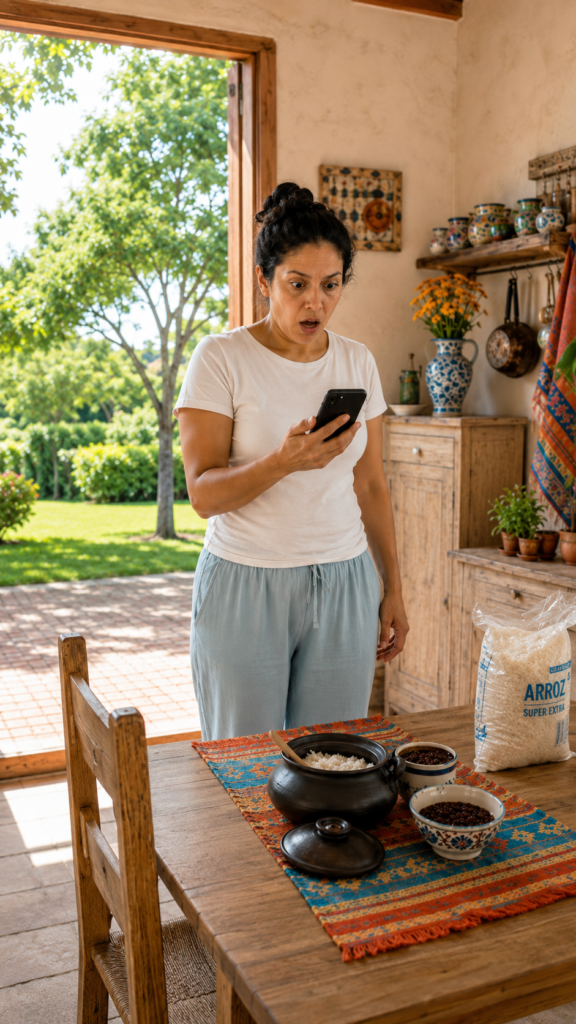
Ramiro went to take a shower because he had another 'extra shift.' He left his cellphone on the kitchen counter next to the rice Daniela was cleaning for dinner.
The phone vibrated.
A message popped up from a contact saved as 'Workshop.'
Daniela thought it was something about the truck and tapped the notification.
But it wasn’t any workshop.
It was a rental manager.
'Sir Ramiro, the payment for the furnished apartment near Hospital Ángeles has been made. The young lady can pick up the keys tomorrow.'
Daniela felt her spine freeze.
She opened it.
There were photos.
Ramiro sitting in restaurants in Satélite, with plates of meat, expensive desserts, and drinks in glasses. Across from him, a slender woman with dark glasses, a scarf on her head, and a weary face.
And then she read the message that shattered her dignity into pieces.
'I have Daniela on rice and soup. She thinks there’s no money. She doesn’t even suspect, she’s really dumb.'
Dumb.
She, who mended the kids’ sneakers with black thread.
She, who ironed his shirt before he went out to see another woman.
She didn’t scream when Ramiro came out of the bathroom.
She handed him his lunchbox. Watched him kiss the kids. Let him go.
As soon as she closed the door, she grabbed black garbage bags and stuffed in her clothes, her shoes, her razor, her cheap colognes, and the shirts she had bought on sale.
She called the landlord of the apartment where they lived. Showed him the messages. Since the lease was in her name and she paid part of the rent, the man agreed to change the lock that same weekend.
On Sunday afternoon, Ramiro came home whistling.
He inserted the key.
It didn’t open.
He tried again.
Still nothing.
—Daniela! Let me in! What did you do?
The neighbors started peeking out.
Daniela opened just a crack, with the chain on. Then she threw the black bags into the hallway.
—There are your things. Go to your lady in the apartment.
Ramiro turned pale.
—It’s not what you think. I swear, Dani, let me explain.
—Explain what? That my kids are having rice for dinner while you’re paying rent for another woman?
—She needs me.
—How nice. Then let her take you in.
Ramiro began to cry right there, in front of everyone.
—Please, don’t do this. You don’t know anything.
Daniela slammed the door in his face.
She stood trembling with anger. Grabbed the cellphone he had forgotten again on the counter to get more evidence.
She searched for the pinned conversation at the top.
It didn’t say 'Workshop.'
It didn’t say 'my love.'
It said: Marisol Hernández.
The full name of her sister.
And the first message, dated a year earlier, said:
'Ramiro, it’s Marisol. Don’t tell Daniela that I’m dying.'
PART 2
Daniela read that phrase three times.
The kitchen fell silent. She could no longer hear the kids playing in the room, nor the banging of Ramiro on the door, nor the neighbor whispering in the hallway.
She only saw her sister’s name on the screen.
Marisol Hernández.
Her own blood.
The same sister she had sworn she would never see again.
With a stiff finger, Daniela scrolled back to the beginning of the conversation.
There were photos.
They weren’t pictures of a hidden mistress in a nice apartment.
They were pictures from hospitals.
Marisol on a stretcher. Marisol in a blue gown. Marisol without hair, with a catheter in her arm and cracked lips. Marisol smiling just a bit, as if even smiling hurt her.
Daniela felt her anger extinguish all at once.
She scrolled down further.
'Today I couldn’t eat.'
'They changed my medication.'
'Tell my sister not to find out, please.'
'If she knows, she’ll want to pay for everything. She’ll leave her kids without food for me.'
'Promise me you won’t tell her anything.'
And Ramiro always replied the same.
'I promise you.'
'I’ll take care of it.'
'It’s okay, sister-in-law. You’re not alone.'
Sister-in-law.
That word hit Daniela like a slap.
The woman in the apartment wasn’t just anyone.
She was Marisol.
The same Marisol who, according to everyone, was fine in Querétaro. The same one no one mentioned at family gatherings because Daniela would change her expression. The same one who had cried her way out of their mother’s funeral.
Daniela kept reading.
The apartment wasn’t in a luxury tower. It was a furnished room near the hospital where Marisol was receiving treatment. Ramiro rented it because she could no longer travel by bus after her chemotherapy.
The restaurant photos were three in total over a year.
In one, Marisol hadn’t touched her plate. In another, she barely held a spoon. In the last one, Ramiro had written:
'I brought you meat because you said you craved it. Even if you take two bites, it’s worth it.'
Daniela covered her mouth.
For months, she had imagined that woman laughing at her, sipping wine, spending her children’s money.
But that woman was fighting to breathe.
And the cruelest part wasn’t that Ramiro had lied.
The cruelest part was that Daniela understood why Marisol hadn’t reached out to her.
It all started four years ago, after their mother’s burial.
The house smelled of reheated coffee and wilted flowers. Aunts talked about saints, paperwork, debts, and who would take the sewing machine.
Daniela had taken care of her mother in her last months. Bathed her, monitored her blood sugar, changed her diapers, endured her cries of pain.
Marisol hardly visited.
That was what Daniela screamed at her.
—You always run away when things get heavy.
Marisol yelled back. She said she sent money. That she worked until dawn. That no one asked her how she was doing. That Daniela always wanted to seem like the martyr of the family.
Then Daniela said the unforgivable.
—I don’t want to see you in my life again.
Marisol didn’t respond.
She just picked up her bag and left.
And Daniela kept her threat with a stubbornness that now embarrassed her.
No calls. No messages. No birthdays. Nothing.
When someone said Marisol was living peacefully in Querétaro, Daniela nodded and changed the subject.
It was convenient for her to believe it.
It was convenient because that way she wouldn’t have to apologize.
Now she had Ramiro’s cellphone in her hands, and the truth was gnawing at her soul.
Outside, Ramiro was no longer banging on the door.
Daniela opened it.
He was still sitting on the stairs, with the black bags beside him and a face swollen from crying.
The neighbors quickly hid, as if they hadn’t been spying.
Daniela simply said:
—Take me to her.
Ramiro looked up.
—Do you already know?
—Take me.
They didn’t speak on the way.
The city was filled with lights, taco stands, honking cars, couples walking as if the world wasn’t crumbling.
Daniela sat with her hands clenched on her lap.
She wanted to confront Ramiro. She wanted to hug him. She still wanted to hate him. She wanted to hit him for taking away food from her kids. She wanted to thank him for not leaving her sister alone.
All at once.
All jumbled.
They arrived at an old building near the hospital. There was no pool. No marble. No luxury.
Just a chipped gate, a slow elevator, and a hallway that smelled of chlorine, medicine, and loneliness.
Ramiro opened the door.
The room was small.
A bed, a table with pills, a plastic chair, and a little Virgin of Guadalupe with an unlit candle.
Marisol was lying on her side, covered up to her chest. She looked smaller than before, as if the illness had been erasing her piece by piece.
Daniela stood frozen.
Her sister opened her eyes.
It took her a moment to recognize her, but when she did, she wasn’t surprised.
She smiled just a bit.
As if she had been waiting for her all this time.
Daniela knelt by the bed.
—I’m sorry, she said.
She couldn’t say anything more.
She had rehearsed a thousand phrases in her mind during the ride, but in front of those tired eyes, everything turned to waste.
Marisol moved her hand slowly.
Daniela took it.
It was a cold, light, almost transparent hand.
—I’m sorry too, Marisol whispered.
Her voice came out broken.
Daniela cried with a pain that didn’t feel like anger. It was a deeper pain, one that came too late and no longer knew where to settle.
—Why didn’t you tell me? she asked.
Marisol closed her eyes for a moment.
Ramiro approached because he already understood her gestures.
—I didn’t want you to carry another death, he said quietly. That’s what she told me many times.
Daniela looked at her husband.
—And why did you accept it?
Ramiro didn’t defend himself.
He sat in the chair and rubbed his face with his hands.
—Because she found me outside the hospital a year ago. I was delivering packages. She recognized me and nearly fainted. I took her to the emergency room.
His voice cracked.
—She begged me not to tell you. She said you would sell your things, that you’d work double, that you’d stop eating. And yes, Dani. You would have done it.
Daniela couldn’t deny it.
—So you preferred that I think you were a miserable bastard.
—I preferred you to hate me instead of hating yourself when she was gone.
That phrase hung in the room.
Daniela recalled the nights when Ramiro came home tired and she turned her back on him. The times she called him selfish. The times she served him soup without looking at him.
She also remembered her kids asking for more food.
—You took away too much from us, she said.
Ramiro lowered his head.
—Yes. And that doesn’t have an easy forgiveness. I made a mistake. I wanted to save one and hurt three.
Marisol barely squeezed Daniela’s hand.
—Don’t fight, she murmured.
Daniela bit her lips.
It wasn’t the time to judge everything, even though it all hurt.
Marisol moved her lips again.
Ramiro leaned in to listen.
Then he looked at Daniela.
—She wants to ask you something.
—Anything, said Daniela.
Marisol looked at her with those dimmed eyes.
—Red rice, she whispered. The one mom used to make.
Daniela froze.
The rice.
The same rice she had cursed for a year.
The rice of sad dinners. The rice she was embarrassed to serve her kids. The rice that reminded her that Ramiro had taken away half of their expenses.
Marisol didn’t ask for meat. She didn’t ask for flowers. She didn’t ask for a grand apology or pretty words.
She asked for red rice.
The one from her childhood.
The one her mother made on Sundays with tomatoes, garlic, and a little piece of onion.
Daniela kissed her hand.
—I’ll be right back. Don’t fall asleep, okay? Wait for me a bit.
Marisol smiled slightly.
Daniela ran out.
Ramiro wanted to accompany her, but she shook her head.
—Stay with her.
She drove as best she could back to her house.
The new lock still smelled of metal.
The kids were sleeping with the neighbor. The kitchen was empty, with the bag of rice on the table.
Daniela washed the rice with an absurd care, as if each grain could forgive her.
She ground tomatoes with garlic. Heated oil. Sautéed until the smell filled the house.
For a moment, she felt her mother was there, standing behind her, telling her not to stir too much because it would break.
Daniela cried while cooking.
Cried for her sister. For Ramiro. For her kids. For her pride. For those 4 years when a call could have changed everything.
She checked the salt three times.
Covered it.
Waited.
She had never taken such care of a pot.
When the rice was fluffy, red, warm, she put it in a container. Wrapped it in a clean napkin and went out again.
The way back felt eternal.
At every traffic light, she hit the steering wheel with her fingers.
—Wait for me, Marisol. Please, wait for me.
She ran up the stairs because the elevator was slow.
Upon reaching the hallway, she saw Ramiro sitting on the floor.
He had his elbows on his knees and his head bowed.
Daniela knew before he spoke.
But still, she asked.
—Where is she?
Ramiro looked up.
His eyes were wrecked.
—She fell asleep about 20 minutes ago.
Daniela shook her head.
—No.
—She didn’t wake up, Dani.
The hot container slipped from her hands, but Ramiro managed to catch it before it fell.
He held it carefully, as if he were carrying a heart.
Daniela entered the room.
Marisol was still.
The sheet no longer rose or fell.
The little Virgin was still on the table. The candle extinguished. The air heavy.
Daniela approached and laid her forehead on her sister’s hand.
It was still warm.
That shattered her even more.
—I’m sorry, she repeated. I’m sorry for being late.
Ramiro stayed in the doorway, holding the container of rice.
No one knew what to do with that rice.
No mouth to ask for it anymore.
No Sunday to fix it.
Daniela sat on the floor next to the bed. Ramiro sat beside her.
For a long time, they didn’t speak.
Then Daniela rested her head on his shoulder.
Not because everything was forgiven.
Not because the hunger of her children didn’t matter.
Not because the lies were small.
But because they were both broken by the same woman.
And sometimes pain doesn’t absolve, but it brings together those who remain alive.
Months later, Daniela still didn’t know what to do with Ramiro.
They stayed together, but not the same.
He took another job on weekends to recover what he had taken from them. He no longer hid his phone. He no longer said 'make miracles' as if her sacrifice were an obligation.
Daniela also didn’t use pride as a shield again.
One afternoon, she called an aunt she hadn’t spoken to. Another day, she visited her mother’s grave and told her everything, as if the deceased could still scold her.
On Sundays, Daniela cooks red rice.
There isn’t always meat. It doesn’t always stretch for everything. But that rice no longer tastes like misery.
It tastes like memory.
She serves 5 plates, even if only 4 are felt at the table.
The fifth one she places by the window.
At first, her kids would ask why no one touched it.
Daniela told them the truth, without too much embellishment.
—It’s for your aunt Marisol. So we never forget that family isn’t to be left for later.
The rice cools by itself, every Sunday.
Ramiro watches it in silence.
So does Daniela.
Sometimes one thinks that love is demonstrated by giving everything. Or by silencing everything. Or by enduring everything.
But life charges dearly for secrets.
And it charges even more dearly for pride.
Because there are words that can be apologized for.
But there are plates that, even if they come out perfect, arrive too late.





