PART 1
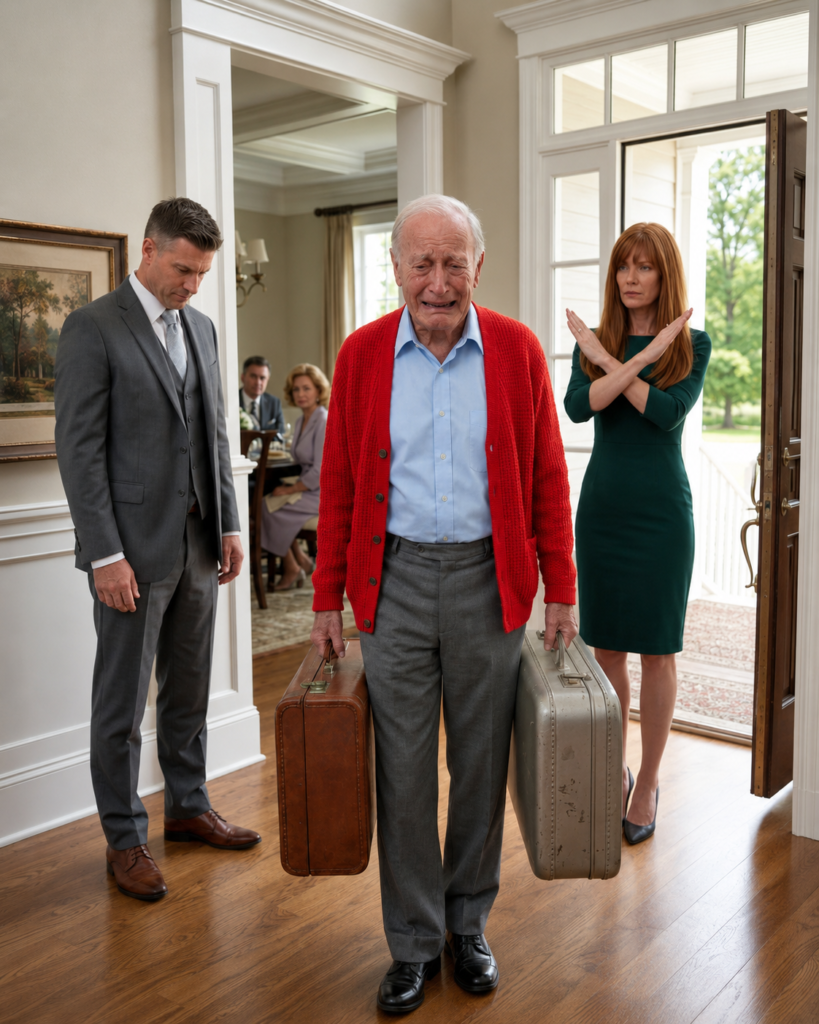
To everyone, Don Arturo Mendoza was just a quiet old man, one of those who made no noise, asked for nothing, and was content with a warm bowl of soup.
In his son Leonardo's house, in a gated community in Querétaro, he was the guy who fixed the water pump, changed light bulbs, tended to the plants, and made chilaquiles on Sundays.
No one imagined that behind his pressed shirts and old shoes, Arturo had saved up $800,000 over the years.
Not even Leonardo knew.
At 68 years old, Arturo had worked for 35 years as a senior accountant at an auto parts company. He was a man of numbers, receipts, contracts, and silences.
After his wife's death, Leonardo asked him to move in with him and Renata, his wife.
—Dad, come live with us. I don’t want you to be alone —he said one afternoon, his voice breaking.
Arturo agreed because his apartment in the Del Valle neighborhood had become too big, too quiet, and too filled with memories.
At first, Renata was kind.
She called him “Don Arturo” with a sweet smile, served him coffee, asked if he needed anything.
But slowly, the sweetness began to turn sharp.
First, it was small things.
—Could you eat in the kitchen? Some friends are coming over tonight.
Then:
—Would you mind staying in your room for a bit? We're having a couples' gathering.
Arturo obeyed without arguing.
He told himself he didn’t want to cause problems. That Leonardo worked hard. That a peaceful house was worth more than winning an argument.
But a house can also humiliate in silence.
At Christmas, Renata set up a small table away from the hallway.
The family ate in the big dining room, amidst laughter, toasts, and photos. Arturo dined alone, with a plate of lukewarm cod, listening from afar as everyone celebrated as if he were an old piece of furniture.
Leonardo saw him.
He said nothing.
That silence hurt more than any insult.
As the months went by, Renata began to treat him like an unwelcome guest.
—If my friends arrive, could you use the service entrance? They tend to ask questions.
Arturo walked down the side hallway of the house with a grocery bag in his hand, as if he didn’t belong to the home he helped support.
Because even though no one said it, Arturo was paying for many things.
He helped with the down payment on the house.
He signed as a guarantor for the car loan.
He covered several installments when Leonardo fell behind.
He discreetly paid a credit card that Renata had maxed out buying furniture, clothes, and trips to San Miguel de Allende.
He never claimed anything.
He kept everything filed away.
Contracts, receipts, transfers, notarized signatures.
Arturo didn’t collect grudges.
He collected evidence.
The night everything exploded, Leonardo had invited his bosses to dinner.
Renata moved around the living room in a ridiculously expensive dress, strong perfume, and a magazine smile.
Arturo had spent the afternoon preparing stuffed mushrooms, Leonardo's favorites since childhood, with garlic, Oaxaca cheese, and a touch of serrano pepper.
When he entered the living room with the tray, Renata pressed her lips together.
—Don Arturo, please, don’t hover over people. It looks weird.
He lowered his gaze and stepped back.
A little while later, she approached him again, no longer pretending to be polite.
—You’d better go to your room. Honestly, you’re bothering us today.
Arturo looked at Leonardo.
His son held a wine glass and pretended not to hear.
Then Renata raised her voice enough for everyone to turn.
—Leonardo, are you going to do something or not? Your dad needs to leave this house.
The room froze.
The guests fell silent.
Leonardo turned pale.
Arturo waited. He was just waiting for one word. Just one.
But his son took a deep breath and said:
—Dad… maybe we do need space.
In that moment, Arturo understood everything.
They weren’t just kicking him out of a room.
They were kicking him out of his place in the family.
That night, while the house slept, Arturo packed two suitcases. He stuffed in clothes, documents, photos of his wife, and a notebook where he had been recording every peso that had left his account for years.
He left the keys on the kitchen counter.
He didn’t write a note.
At 6:15 in the morning, he took a taxi to downtown.
At 9:00, he was sitting in front of a lawyer named Mariana Cárdenas.
She reviewed his folders without interrupting him.
When he finished, she simply asked:
—What do you want to do, Don Arturo?
He calmly replied:
—Separate from them. Legally. Financially and emotionally.
Mariana closed a folder and nodded.
—Then we’ll do it clean. Three notifications. Same day. Same time.
Three weeks later, a messenger arrived at Leonardo and Renata's house with three white envelopes.
Renata opened the first one lazily.
Then she opened the second with trembling hands.
And when she saw the seal on the third, she screamed so loudly that Leonardo came running down the stairs, unaware that his life had just been split in two.
PART 2
Leonardo found Renata at the entrance, barefoot, with coffee spilled on her robe and the three envelopes scattered on the floor.
—What happened? —he asked, still half asleep.
She didn’t respond.
She just threw the first document at his chest.
It was a bank notification.
Arturo Mendoza was formally withdrawing his backing as a guarantor in the mortgage restructuring that Leonardo had requested four months earlier.
The house was still in Leonardo's name, yes, but the approval for refinancing depended on Arturo's income and impeccable history.
Without him, the bank demanded an immediate review.
And if they didn’t present another guarantor in 15 days, the rate would go up, the monthly payment would double, and the overdue payments would enter collections.
Leonardo felt his mouth dry up.
—He can’t do that…
Renata opened the second envelope in rage.
It was for the financing of the black truck she flaunted on Instagram.
Arturo was also listed as a co-obligor.
Not because he wanted to look good, but because Leonardo had begged him one night, nearly in tears, saying that Renata couldn’t find out that their credit was in tatters.
Now Arturo revoked any future authorization, canceled direct payments from his account, and demanded the financial institution deal directly with the actual debtors.
—So the old man left us to deal with everything? —Renata spat.
Leonardo didn’t answer.
Because for the first time, he understood something horrible: his dad hadn’t punished them.
He had simply stopped saving them.
The third envelope was worse.
It was a notarized letter.
Mariana Cárdenas informed them that, according to a private contract signed three years ago, the 600,000 pesos that Arturo had given for "temporary housing support" were not a gift.
They were a family loan.
With date, signature, witnesses, and a copy of identification.
Renata put her hands on her head.
—You told me that money was a gift from him!
Leonardo closed his eyes.
Yes, he had said it.
Because he was ashamed to admit that his father was sustaining the perfect family dream that Renata boasted about in gatherings.
That morning, the calls began.
First to Arturo's cell.
No answer.
Then messages.
“Dad, we need to talk.”
“This has gotten out of control.”
“Renata was stressed.”
“You know we love you.”
Arturo read each message from a small café near Zenea garden. He was having sweet bread and black coffee. For the first time in years, no one asked him to eat in the kitchen.
He didn’t respond.
On the third day, Leonardo went to find him.
He found him in a modest but clean rented cottage, with flowerpots in the window and a photo of his mother on a shelf.
When Arturo opened the door, Leonardo looked ten years older.
—Dad, please. We could lose the house.
Arturo looked at him without hatred.
That was what hurt Leonardo the most.
—And when did you feel that I was also leaving? —the old man asked.
Leonardo lowered his gaze.
—I didn’t know how to handle Renata.
—No, son. You did know. You chose not to.
The silence fell heavily.
Leonardo tried to explain the debts, the work, the pressure, the appearances. He said that Renata wanted a better life, that he was just trying to keep everything together.
Arturo walked to the table and placed a folder in front of him.
—I also tried to keep everything together.
Leonardo opened it.
Inside were the receipts for overdue payments, the deposits for the mortgage, transfers to the mechanic, the account statements for Renata's card, the hospital bills for a minor surgery she never thanked.
Page after page.
Years of silent support.
Leonardo covered his face.
—I didn’t know it was so much...
Arturo breathed slowly.
—It wasn’t the money I wanted you to see. It was my presence.
Then Renata arrived.
She didn’t knock. She entered behind Leonardo as if she could still command.
—Don Arturo, that’s enough. You can’t ruin your son’s life because you’re throwing a tantrum.
Arturo observed her serenely.
—I didn’t ruin anything, Renata. I stopped financing what you built on top of my dignity.
She let out a nervous laugh.
—Oh, please. Now you’re the victim? You lived for free in our house for six years.
Leonardo raised his face.
—Renata, shut up.
It was the first time he confronted her.
But it was too late.
Renata, furious, unleashed what she had been holding back.
—I never wanted him here! Your dad made the house look poor. My friends thought we were weird. Always with his old sweaters, his Tupperware, his dead wife's photos...
Leonardo stood up.
—You’re talking about my mom.
Renata stopped, but not out of remorse.
Out of calculation.
Arturo opened another folder, thinner this time.
—There’s something else you need to know, son.
Leonardo felt a blow to his chest.
Inside were printed copies of messages exchanged between Renata and a real estate advisor.
Arturo hadn’t looked for them. He found them by accident when Renata asked him to fix the printer and left her session open.
In the messages, Renata talked about selling the house when the situation “calmed down,” getting Arturo “out without drama,” and convincing Leonardo to take out another loan using “the old man as backing while it lasted.”
But the final message changed everything.
“When Leonardo signs for your dad's land, we’ll be rid of that problem forever.”
Leonardo froze.
—What land?
Arturo swallowed hard.
—The land in Valle de Bravo that belonged to your mother. I was planning to leave it to you.
Renata turned pale.
Leonardo looked at her as if he had just met her.
—Did you know about the land?
She didn’t answer.
That was the twist that finally shattered the mask.
Renata didn’t just want to kick Arturo out of the house. She wanted to isolate him, pressure him, make Leonardo take everything before its time, and then sell it.
It wasn’t discomfort.
It was strategy.
Leonardo took a step back, as if Renata burned.
—Was all this about money?
—Don’t be naive —she replied, now emotionally unmasked—. Your dad was going to die someday. I just wanted things to be settled.
Arturo closed his eyes.
He didn’t cry.
But Leonardo did.
He cried like a child, with shame, with guilt, with a broken face.
—I’m sorry, Dad… please.
Arturo looked at him for a long time.
In that moment, he could have humiliated him. He could have told him he deserved it. He could have reminded him of every night he dined alone, every back door, every silence.
But he simply said:
—I forgive you as a son. But I’m not going to rescue you as a man anymore.
Renata exploded.
—So you’re going to let us lose the house!
Arturo replied without raising his voice:
—No. You lost it when you confused family with an ATM.
The following weeks were hell for Leonardo.
Renata tried to convince everyone that Arturo was a manipulative old man. But the papers spoke louder than her tears.
The bank denied the restructuring.
The truck was returned.
The credit card was frozen.
And the family loan contract went into mediation.
Leonardo moved to a small apartment. Renata went to stay with a friend in Juriquilla, though she soon discovered that a life without appearances couldn’t be flaunted.
One Sunday, Leonardo visited Arturo with a bag of sweet bread.
He didn’t go to ask for money.
He went to ask for permission to sit.
Arturo opened the door and let him in.
They ate at the same table.
No guests.
No shame.
No one hiding the old man in a room.
Leonardo told him he was in therapy, selling things, paying debts, and learning, late but for real, to live without using his father as a safety net.
Arturo listened in silence.
In the end, Leonardo looked at his mother’s photo and whispered:
—She would have slapped me.
Arturo smiled faintly.
—Yes. And then she would have served you coffee.
The $800,000 remained intact.
But Arturo changed his will.
He wouldn’t leave everything unconditionally anymore.
A portion would go to a foundation for elderly people abandoned by their families. Another part would remain in trust for Leonardo, only if he demonstrated stability, responsibility, and respect.
It wasn’t revenge.
It was justice with memory.
Because there are children who believe that a father can endure everything for love.
And maybe that’s true.
But even the greatest love tires when forced to enter through the back door.





