PART 1
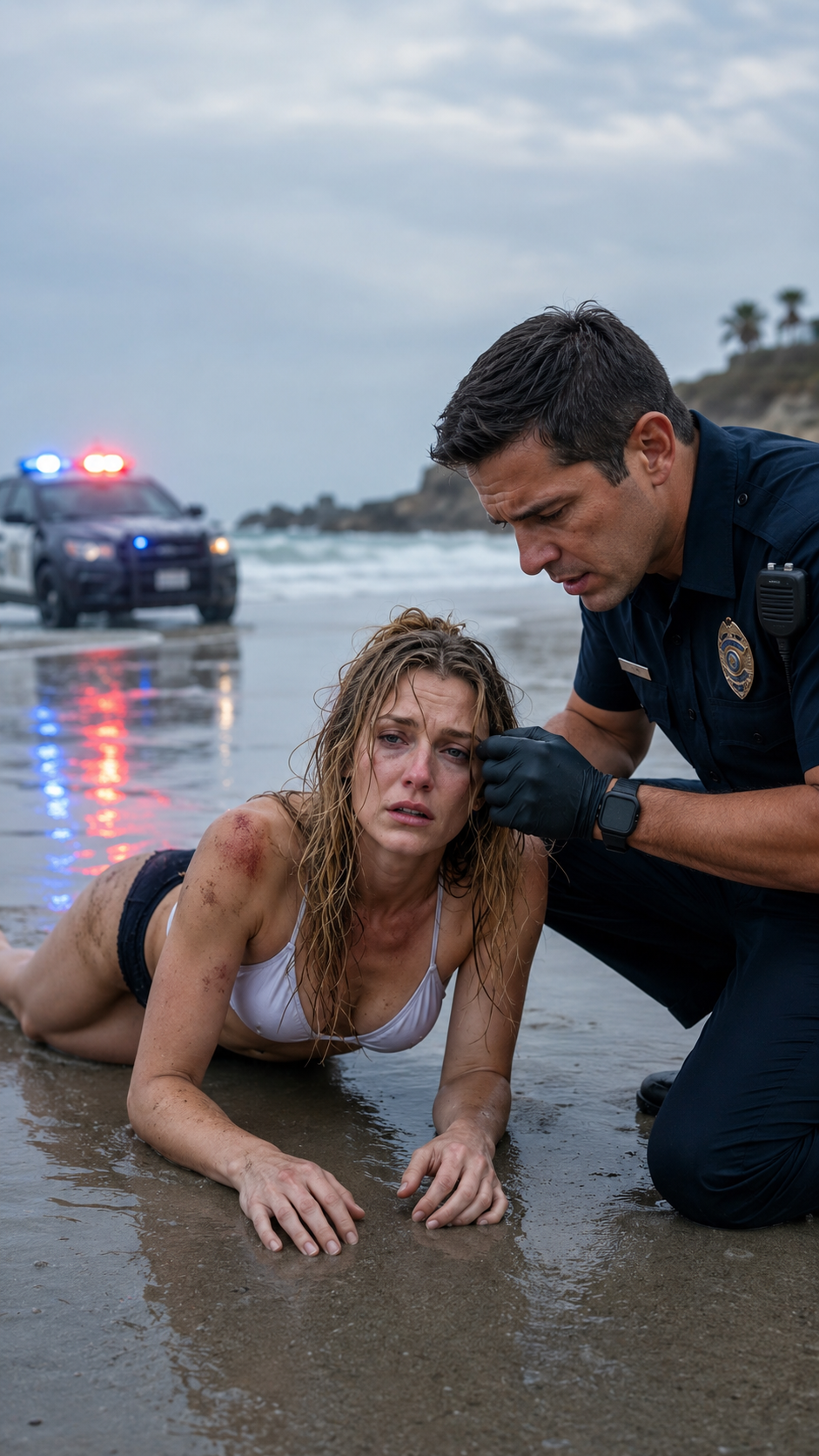
Valeria's white bikini was soaked in sand, salt, and blood.
When the paramedics found her among the rocks of a private beach in Los Cabos, someone said she must have slipped after a party. Another murmured that maybe she had had too much to drink. And a nervous guard tried to repeat the narrative he had been ordered to tell.
—It was an accident, she fell on her own.
But no.
Valeria Cárdenas hadn’t fallen.
She had been beaten, dragged, and left there for the tide to do the dirty work.
And the man who did it was the same one who, three hours earlier, had kissed her in front of 200 guests while everyone applauded their upcoming wedding.
Sebastián Aldama was the media darling, a businessman favored by society magazines. Owner of hotels, construction companies, and foundations with pretty names, he appeared on television donating ambulances, scholarships, and groceries. To the public, he was a saint in an Italian suit.
To Valeria, he was something else.
A monster with a magazine-cover smile.
She came from a humble neighborhood in Guadalajara. She had studied law on a scholarship, working as a waitress on weekends, and had become a respected criminal lawyer. She wasn't famous, she didn’t have a heavy surname, but she had something Sebastián could never stand: intelligence.
When they started dating, everyone said she was lucky.
—Honey, you hit the jackpot —they would repeat to her.
But Valeria never felt like a winner. At dinners, Sebastián corrected her in public.
—Don’t talk about the law, love. People come to relax, not to hear you give a lecture.
If she voiced an opinion, he would squeeze her hand under the table until it left marks.
If she got annoyed, he would smile.
—Don’t make a scene, Vale. You look prettier when you’re quiet.
She remained quiet many times.
Not out of submission.
Out of strategy.
For the past seven months, Valeria had been investigating Sebastián with her sister Jimena, also a lawyer. One of their clients, Teresa Márquez, had lost her home after reporting a real estate scam linked to a shell company under Grupo Aldama. Days later, Teresa was found dead in a ravine near Tepotzotlán.
The prosecutor's office called it an accident.
Valeria never believed it.
That night, in Sebastián's villa by the sea, everything seemed perfect. Live music, champagne, politicians, influencers, businessmen, and cameras capturing the official wedding announcement.
—Tomorrow everyone will know you’re the future Mrs. Aldama —Sebastián whispered, gripping her waist too tightly.
—I can still back out —she replied, not smiling.
His gaze hardened.
Later, Valeria confronted him on a terrace, away from the guests. She told him she knew about the shell companies, the bribes for construction permits, the accounts in Panama, and the properties stolen from entire families.
Sebastián didn’t shout.
That was what scared her the most.
—Valeria —he said calmly—, women like you don’t take down men like me.
Then he hit her.
He dragged her down private stairs to the beach. She could hardly breathe. She felt blood filling her mouth and her skin burning against the sand.
—They’ll say you drank too much —he whispered in her ear—. That you got intense, that you ran out and fell. Poor thing. Such a tragedy.
He left her among the rocks, hoping the sea would make her disappear.
But Sebastián made a mistake.
He didn’t check the silver bracelet Valeria was wearing on her wrist.
PART 2
The bracelet looked like an elegant piece of jewelry, one of those Sebastián claimed to have bought at an expensive boutique in Polanco.
But it wasn't his.
Jimena had given it to her two weeks before, with a tiny camera, microphone, locator, and automatic cloud backup.
—Just in case this guy takes off his mask —her sister had said.
And that night, Sebastián took it off completely.
Valeria woke up in a private hospital in Cabo San Lucas with a bright light above her eyes and her body full of pain. She had a fractured rib, a hurt shoulder, cuts on her legs, and bruises that looked like dark maps on her skin.
Jimena was sitting next to the bed. She wasn’t crying. Her eyes were red, but her jaw was set.
—Don’t talk, Vale. You’re safe now.
Valeria barely moved her lips.
—The bracelet…
Jimena leaned in.
—It’s all saved. Audio, video, exact location, time, face, voice. Everything.
Valeria closed her eyes.
Not out of fear.
Out of rage.
Jimena showed her the phone. In the recording, Sebastián could be seen dragging her through the sand, his white shirt stained and his expression cold, as if he were rearranging a broken piece of furniture.
His voice sounded perfect.
—When they find your body, I’m going to cry on camera. All of Mexico will pity me.
Valeria couldn’t help a tear rolling down her temple.
That man had rehearsed his mourning before killing her.
While she remained hospitalized, Sebastián began his performance.
He appeared before the press wearing dark glasses, a two-day beard, and a shaky voice. He said Valeria had suffered a terrible accident on the beach. He asked for respect for the family. He thanked God that she was still alive.
Reporters called him “a devastated fiancé.”
On social media, many defended him.
“Poor man, he looks destroyed.”
“I’m sure she got intense.”
“Women want fame, and then they play the victim.”
Valeria read some comments from her bed and felt nauseous. Not from the physical pain, but from the ease with which people believed a millionaire’s suit over the battered body of a woman.
Within 48 hours, Sebastián’s lawyer arrived.
He was a flawless man, with a leather briefcase and a funeral home smile.
—Attorney Cárdenas —he said, as if respecting her was a temporary courtesy—. Mr. Aldama will cover all your medical expenses, therapy, recovery, and a private settlement. We just need you to sign this statement.
He left a folder on the bed.
Valeria opened it slowly.
The document stated that she had been drinking, that she had lost her balance, and that she had never been assaulted by Sebastián.
Jimena stood up furiously.
—Are you really coming to threaten her here?
The lawyer didn’t even look at her.
—It’s not a threat. It’s common sense. Your sister has no way to sustain such an accusation against a man like Sebastián Aldama.
Valeria held the pen with a trembling hand.
—And if I don’t sign?
The lawyer smiled.
—They’ll destroy you. They’ll say you were unstable, jealous, interested. There are witnesses ready to testify that you drank too much. And to be honest, attorney, no one wants to mess with someone who funds campaigns, hospitals, and courts.
Valeria signed.
The lawyer left satisfied, thinking he had won.
He didn’t know that three hospital cameras had recorded all the pressure. He didn’t know that Jimena had already informed the prosecutor’s office. He didn’t know that Valeria signed with a minimal variation in her signature, a professional mark she used on documents obtained under coercion.
And he didn’t know the most important thing.
The formal complaint had already been drafted.
That night, Commander Raúl Salvatierra entered the room, from a special unit against economic crimes and high-profile violence. He carried a thick file and looked like he hadn’t slept in days.
—Attorney Cárdenas —he said—, we need to know how far you want to go.
Valeria looked at her bruised arms. She thought of Teresa Márquez. She thought of the families who lost their homes. She thought of the women who remained silent because the aggressor had money, bodyguards, and a surname.
—To the end.
The commander opened the file.
Inside were bank statements, transfers, names of notaries, officials, judges, and businessmen. There were also photographs of two other women.
Valeria felt her blood run cold.
—Who are they?
Salvatierra took a deep breath.
—Sebastián’s ex-partners. One died in a supposed yacht accident four years ago. The other disappeared after signing a confidentiality agreement. Her family received money and never spoke again.
Jimena covered her mouth.
Valeria said nothing for several seconds.
Then she understood the true size of the monster.
Sebastián not only stole houses.
He didn’t just buy authorities.
He also made women disappear when they stopped serving him.
The annual Aldama Foundation gala was held one week later at a luxury hotel in Mexico City. Sebastián didn’t cancel it. On the contrary, he turned it into a spectacle.
He said the event would be dedicated to Valeria.
The hall was filled with politicians, television hosts, businessmen, influencers, and society ladies in expensive dresses. Cameras were broadcasting live. At the entrance, a huge screen displayed photos of Sebastián hugging children and handing out checks.
He stepped onto the stage in a black suit and with seemingly tearful eyes.
—Tonight —he said in a broken voice—, I want to dedicate this recognition to the woman I love. Valeria is fighting to recover from a terrible accident, and I will be with her every step of the way.
The audience rose to applaud.
Then the lights flickered.
The screens went dark.
For five seconds, the hall was silent.
Then Valeria appeared.
Not in person yet.
In video.
She was sitting up in the hospital bed, pale, with a battered face and her hair tied back. She wore no makeup. She wasn’t trying to look pretty. She looked alive. And that was enough.
—My name is Valeria Cárdenas —she said in the recording—. If you’re watching this, it’s because Sebastián Aldama thought he could kill me and turn my body into a sad note to clean up his image.
The hall froze.
Then came the recording from the beach.
The sand.
The rocks.
Sebastián's hands.
His voice saying:
—They’ll say you drank too much.
A woman screamed.
A politician tried to leave, but the doors were already closed.
The image shifted to documents, transfers, fake deeds, names of shell companies, and the photo of Teresa Márquez. Then the faces of the other two women appeared.
Sebastián stepped back on stage.
—That’s false —he stammered—. It’s manipulation. Turn that off!
No one turned it off.
The main doors opened, and police, public prosecutors, and federal agents entered. Commander Salvatierra walked to the stage with a search warrant.
—Sebastián Aldama, you are under arrest for attempted feminicide, coercion, money laundering, real estate fraud, and organized crime.
Sebastián lost his composure.
—You have no idea who I am!
Then Valeria walked into the hall.
She walked slowly, leaning on a cane. She wore a white suit, not like a bride, but as a living proof that he hadn’t managed to bury her. Each step hurt her, but she didn’t lower her gaze.
Sebastián saw her and turned pale.
—Vale…
She raised a hand.
—Don’t say my name like it still belongs to you.
Flashes exploded. The people who minutes before were applauding him now looked at him in horror. His mother cried at a table. His partners stepped away as if they had never known him. His lawyer tried to hide among the guests.
—You signed —Sebastián spat—. You signed that it was an accident.
Valeria pulled out a copy of the document.
—I signed under duress. Your lawyer was recorded. Your bodyguards too. Your calls to erase the cameras in the villa also. And by the way, the server wasn’t in your house.
Jimena appeared behind her with another folder.
—It was in the cloud, champ. Just like everything else.
Sebastián tried to run.
He didn’t make it even to the first row.
Two agents threw him to the ground in front of the same audience that had turned him into a hero. That image went viral before midnight: the black-suited philanthropist handcuffed while Valeria, battered but strong, looked at him without crying.
Before they took him away, Sebastián shouted at her:
—You destroyed me!
Valeria approached slightly.
—No, Sebastián. You destroyed yourself. I just turned on the light.
The case shook the country for months. Grupo Aldama was intervened. Several accounts were frozen. Officials resigned. Four notaries were investigated. Families who had lost their homes began to recover deeds and money.
Teresa Márquez’s family finally heard in a hearing that her death hadn’t been a mere accident.
Teresa’s mother embraced Valeria in the courthouse hall.
—My daughter didn’t come back —she told her—, but they won’t call her a liar anymore.
Valeria cried there for the first time, without feeling weak.
Sebastián remained in preventive detention without bail as the more serious charges progressed. His interviews, awards, and charity speeches were erased from the same pages that had once adored him.
But what divided people the most wasn’t his fall.
It was the question that lingered on social media:
How many monsters are still applauded just because they have money?
Six months later, Valeria and Jimena opened a legal office for women threatened by powerful men. They named it “Light of Teresa.”
At the entrance, they didn’t put a pretty phrase.
They put a warning:
“Surviving is not being silent. Surviving can also mean testifying.”
Valeria still had scars. Some were visible. Others were not.
But when a woman came trembling, afraid of not being believed, Valeria didn’t promise her it would be easy.
She just told her the truth:
—Sometimes the world believes the aggressor first. But one piece of evidence, one voice, and one woman who decides not to give up can change everything.





