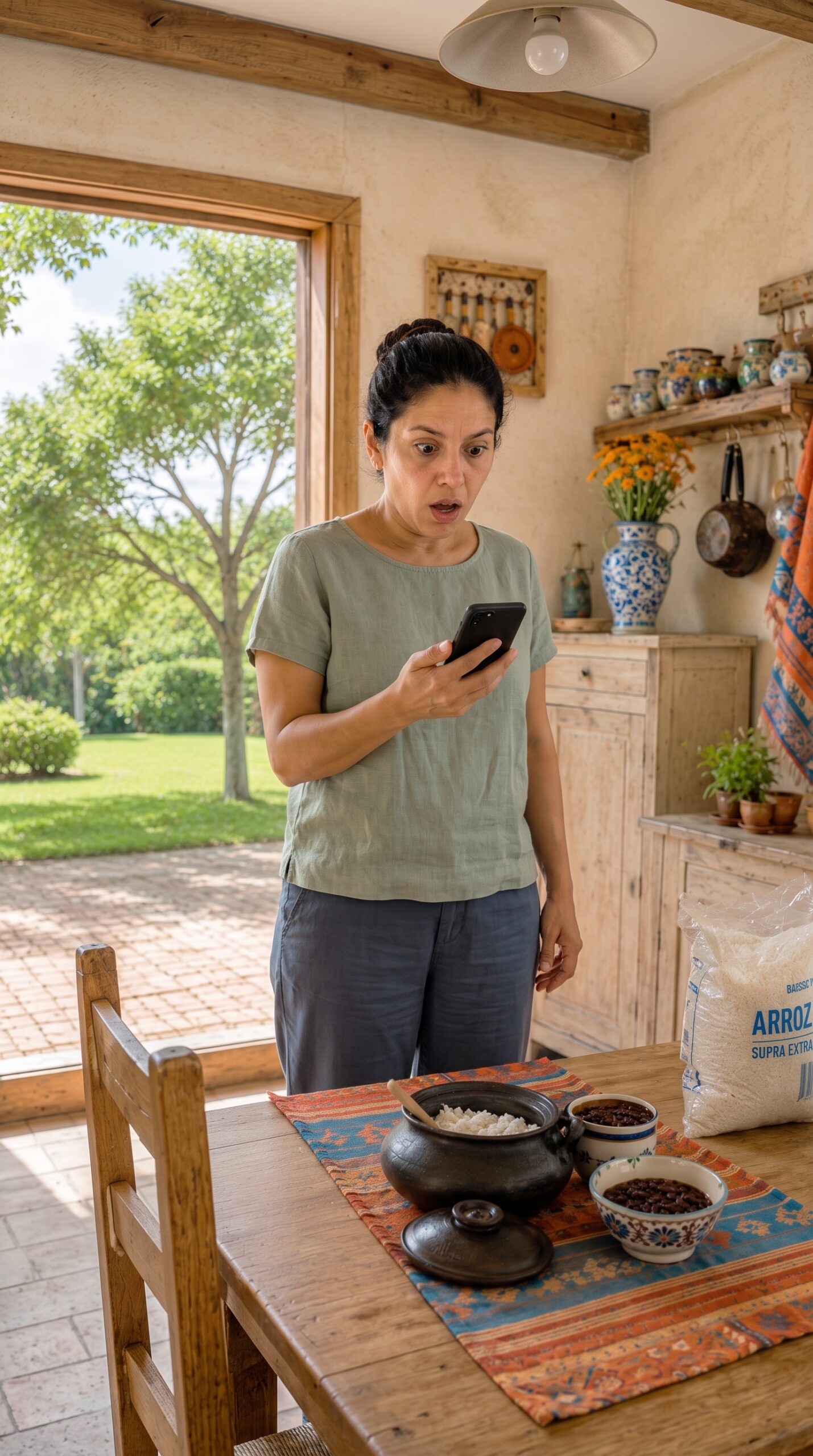
PART 1
Adriana could barely afford the electricity bill, buy tortillas, and send her kids to school in clean uniforms.
For her, it was almost never enough.
She was 35, had 2 kids, and had been married to Sergio for 9 years—a package driver who used to come home with warm bread rolls, now entered the apartment as if his fatigue gave him the right to shatter everyone’s soul.
They lived in an old unit in Nezahualcóyotl, where the walls were thin, and the neighbors knew everything: who was behind on rent, who shouted in the middle of the night, and who cried with the key in the door to muffle the sound.
Adriana did laundry for a living and cleaned three offices near Zaragoza. She left before 6 AM and returned home with her hands dry from bleach.
Yet every payday, Sergio left less money.
"There's nothing, Adriana. Stretch what you have. Or what, do you want me to print more?"
She counted coins on the table.
She bought bruised tomatoes, bones for flavoring the broth, and rice by the kilo at Don Chuy's store.
Her children, Emiliano, 8, and Sofía, 6, asked when there would be chicken.
"On Sunday, my loves," she would say.
But Sunday would come, and there was still none.
Sergio, on the other hand, always came home with his lunchbox full. Red rice, beans, eggs with chili, and tortillas wrapped in a napkin.
"Your dad works a lot," Adriana told the kids, even though the lie burned her inside.
For months he had come home late. He took a shower as soon as he entered. He kept his cell phone face down. And if she asked, he responded with annoyance.
"Don’t start with your stories, seriously."
Adriana had a younger sister, Paola. They hadn’t spoken in 5 years, since their mother passed away at the General Hospital. The fight was horrible.
Adriana cared for their mother until her last day. Paola showed up late to the funeral, thin and broken, with a suitcase in hand.
But Adriana didn’t listen.
She hurled words she couldn’t take back.
"While I rotted taking care of her, you lived like a queen. I don’t have a sister."
Paola left for Querétaro and never returned.
Adriana chose to hate her because it was easier than accepting that she missed her too.
One Thursday, Sergio came home pale. He locked himself in the bathroom and spoke softly on the phone.
"I swear she knows nothing. I won’t involve her in this."
Adriana stood outside with a wet shirt in her hands.
She felt a stab, but didn’t ask.
On Saturday, Sergio said he had an extra route. He went to take a shower and left his phone charging in the kitchen.
The device vibrated.
A message appeared on the screen.
"Mr. Sergio, the payment for the furnished room has been confirmed. The young lady can pick up her medication at reception."
Adriana felt the air leave her chest.
She unlocked the phone because she knew the code: Emiliano’s birthday.
She opened the chat.
There were pictures of Sergio at nice diners, paying bills, buying juices, soups, gelatins, desserts. A slender woman appeared in front of him, wearing dark glasses, a scarf on her head, and sickly yellow skin.
Then she found a message from Sergio.
"My wife thinks there’s no money. I’m feeding her nothing but rice. The poor fool has no clue."
Fool.
Adriana read that word until it stopped hurting and began to burn.
When Sergio emerged from the bathroom, she didn’t scream.
She handed him his lunchbox.
She watched him leave.
Then she filled black trash bags with his clothes, shoes, papers, and even the jacket she bought him for Christmas in small payments.
She called the landlord and requested to change the lock.
On Sunday, Sergio arrived.
He inserted the key.
It wouldn’t open.
He knocked on the door.
"Adriana, let me in! Please!"
The neighbors peeked out as if the hallway were a stage.
Adriana opened with the chain still on and tossed the bags out.
"Here are your things."
"It's not what you think."
"Of course it is. You’re paying for a room for her and feeding your children rice."
"She needs me."
"Then let your queen give you a house."
She slammed the door in his face.
Sergio was left crying in the hallway.
Adriana grabbed the cellphone to send proof to a lawyer. But when she opened the pinned chat at the top, she saw the woman’s full name.
It didn’t say "Work."
It didn’t say "My love."
It said: Paola Mendoza Salas.
Her sister.
PART 2
Adriana froze.
Outside, Sergio continued knocking on the door, but she no longer heard him. The hallway, the whispers, the black bags, and the shame ceased to exist.
Only that name remained.
Paola Mendoza Salas.
The same sister she swore never to see again. The same one she erased from her contacts, from family pictures, from every conversation with her children.
Adriana opened the first message.
It was from 11 months ago.
"Sergio, this is Paola. Mrs. Lupita gave me your number. Please don’t tell Adriana. I don’t want her to see me like this."
Adriana swallowed hard.
She kept reading.
There was a picture of Paola in a hospital bed. She had an IV in her arm, dry lips, and her head covered with a beige scarf. Her eyes, once large and mocking, looked sunken.
She wasn’t a mistress.
She wasn’t a woman of luxury.
She was her sick sister.
Adriana sat on the kitchen floor with the cellphone in her hands. The kids were sleeping in the bedroom, unaware that their mother’s world had just shattered again.
The messages were countless.
Medical prescriptions.
Lab results.
Chemotherapy appointments.
Pictures of medication boxes.
Voice messages sent at dawn when pain wouldn’t let her sleep.
"I couldn’t get out of bed today."
"Sorry for asking again."
"Are your kids okay?"
"Is Adriana still making the red rice like our mom?"
Adriana covered her mouth to suppress a scream.
The pictures from restaurants weren’t romantic dinners. They were desperate attempts by Sergio to get Paola to eat something. In almost every one, her plate remained untouched.
Noodle soup.
Tlalpeño broth.
Gelatin.
Rice pudding.
She barely took 2 spoonfuls and smiled as if she didn’t want to make him feel bad.
The furnished room wasn’t a luxury apartment either.
It was near the General Hospital, in a gray building with peeling walls, dirty stairs, and a sign that read "rooms for rent weekly." Sergio paid for it so Paola wouldn’t have to travel alone from Querétaro after each treatment.
Adriana scrolled further down.
She found an audio.
Paola’s voice emerged weak, broken.
"Take care of her a lot, Sergio. My sister acts tough, but she breaks inside. Don’t tell her. If she finds out, she’ll want to pay for everything, she’ll stop eating, she’ll sell even the kids’ bed. She already had to take care of our mom. I don’t want her to have to take care of me too."
Adriana felt something break inside her chest.
She remembered her mom in bed.
The smell of alcohol.
Nights changing diapers.
High blood sugar.
The screams of pain.
The guilt of getting tired of caring for someone she loved.
She recalled Paola standing by the coffin, trying to speak.
Adriana wouldn’t let her.
She called her selfish.
She called her a coward.
She said she had no family anymore.
Paola lowered her head, hugged her suitcase, and left.
For 5 years, Adriana fed that resentment as if it were justice. Every Christmas, she said it didn’t matter. Every birthday, she pretended not to remember. Every time someone mentioned Querétaro, she changed the subject.
It suited her to imagine Paola happy, healthy, comfortable.
Because that way, she could hate her without remorse.
The cellphone vibrated.
It was Sergio, writing from a neighbor’s phone.
"Let me explain. She’s really bad. Please."
Adriana opened the door.
Sergio was sitting on the ground, his face swollen and his shirt wrinkled. His black bags lay discarded beside him.
The neighbors quickly closed their doors but stayed to listen. In Mexico, gossip doesn’t go away; it just hides.
Adriana raised the cellphone.
"Why didn’t you tell me?"
Sergio didn’t try to play the victim.
"Because she begged me on her knees."
"She was my sister."
"That’s exactly why."
Adriana clenched her jaw.
"You let me think you were cheating on me. You let your children eat watered-down rice. You let me feel like an idiot."
"Yes."
He lowered his head.
"And that’s not excusable. I messed up badly, Adriana. I thought I could handle everything alone. I thought if you didn’t know, you wouldn’t suffer. But I ended up making you suffer in a different way."
"And the message where you call me a fool?"
Sergio cried.
"She asked every day if you suspected. She would get upset, her blood pressure would rise, she couldn’t sleep. I wrote those stupid things to make her believe the secret was still safe. To calm her. To make her not feel guilty."
Adriana felt rage.
But it was no longer the same rage.
It was a horrible mix of anger, guilt, and poorly buried love.
"Take me to her."
Sergio looked up.
"She’s delicate."
"I said take me to my sister."
They didn’t speak in the taxi.
The city passed by the window with its taco stands, potholes, and sad lights. Adriana held the cellphone tight against her chest as if it contained the 5 years she could never get back.
Sergio shared only what was necessary.
Paola had arrived in Mexico City almost a year prior. She had no husband. No children. She lost her job when the treatment began. At first, she slept in waiting rooms and ate what other patients gave her.
A nurse who knew Adriana’s mom gave Sergio Paola’s number.
He went to see her without saying anything.
He found her alone, feverish, sitting on a bench in the hospital.
"I didn’t want to betray you," Sergio said, looking at his hands. "But I also couldn’t leave her there."
Adriana closed her eyes.
She didn’t know whether to hug him or hit him.
They arrived at the building at 9:52 PM.
There was no elegant tower.
No glass or valet parking.
Just an old façade, a pharmacy below, and a crooked sign that said "furnished rooms."
They climbed 4 flights of stairs because the elevator was out of order.
With each step, Adriana felt like she was carrying her own words from the funeral.
"I don’t have a sister."
"I don’t want to see you again."
"I don’t need you."
Sergio opened the door.
The room was small. There was a single bed, a plastic chair, 2 pharmacy bags, a bottle of water, a bucket, and a Virgin of Guadalupe taped to the wall.
Adriana first saw the scarf.
Then the face.
Paola looked like a tired child. The illness had taken her hair, weight, and color, but not her eyes. They were the same eyes that used to hide warm tortillas in her blouse to keep their mother from scolding them.
Adriana approached slowly.
"Pao…"
Paola opened her eyes.
It took her a few seconds to recognize her.
Then she smiled faintly, as if she had been waiting for her for the past 5 years.
Adriana fell to her knees beside the bed.
"I’m sorry. I’m so sorry. I was stubborn. I was cruel. I shouldn’t have said all that."
Paola moved her hand.
Adriana took it.
It was cold, light, almost like paper.
Sergio remained at the door, crying silently.
Paola tried to speak, but no voice came out.
Sergio leaned closer to hear her.
"She says not to cry."
Adriana let out a broken laugh.
"How can I not cry, fool?"
Paola moved her lips again.
Sergio stood still. Then he looked at Adriana with a shattered expression.
"She’s asking if you still know how to make your mom’s red rice."
Adriana stopped breathing.
The rice.
That very same rice she had hated for months.
The rice she served watered down to stretch it.
The rice that made her feel poor, humiliated, abandoned.
The rice she imagined as proof of a betrayal.
It was the last thing Paola wanted to taste.
Not meat.
Not an expensive dessert.
Not restaurant food.
Her mom’s red rice, with tomato, garlic, onion, and a little chili. The one that smelled like Sunday. The one that stuck to the bottom of the pot and over which they both fought as children.
Adriana kissed her hand.
"I’ll be right back. I’m going to make it just the way you like it. But don’t fall asleep on me, okay?"
Paola closed her eyes, exhausted, but squeezed her fingers.
A little.
Enough to promise.
Adriana ran out.
Sergio wanted to follow her.
"Stay with her," Adriana ordered. "Don’t leave her alone for a minute."
She rushed down the stairs, almost tripping.
She took a taxi.
She arrived at the apartment and found her children sleeping with Doña Lupita, the neighbor who had cared for them during the fight. Adriana thanked her without being able to explain anything.
She entered the kitchen.
For the first time in months, she didn’t see the rice as punishment.
She washed it slowly.
She ground tomato with garlic and onion.
She heated oil.
She added the rice and listened to the sizzling, that sound her mother called "when the grain awakens."
She added broth.
A little salt.
A sprig of cilantro.
While she waited, she cried in front of the stove.
She cried for Paola.
For Sergio.
For her children.
For herself.
For all the families that break apart out of pride and then sit at funerals repeating, "if only I had known."
When the rice was ready, she served it in a Tupperware. She wrapped it in a napkin so it wouldn’t lose heat.
She left almost without closing the door properly.
The taxi took too long.
Every traffic light felt like a mockery.
Adriana looked at the Tupperware on her lap as if she were carrying a warm heart.
She arrived at the building at 11:16 PM.
She rushed up the 4 flights.
In the hallway, Sergio was sitting on the ground, his head in his hands.
Adriana understood before asking.
There were no doctors.
No screams.
No miracle.
Only silence.
That heavy silence that seeps into your bones.
"No," she said.
Sergio lifted his face.
His eyes were shattered.
"She fell asleep 18 minutes ago."
Adriana stood frozen, the Tupperware in her hands.
18 minutes.
After 5 years without speaking to her.
After 11 months of secrets.
After so many dinners of rice, so many lies, and so many words left unspoken.
She arrived late by 18 minutes.
The Tupperware slipped from her grasp, but Sergio managed to catch it with both hands, as if there were still something inside worth saving.
Adriana entered the room.
Paola looked peaceful.
For the first time, she didn’t seem to suffer. Her mouth was barely curved, as if she had left knowing her sister was coming back.
Adriana lay down beside her carefully.
She adjusted the scarf.
She whispered everything she hadn’t said in 5 years.
That she did need her.
That she did miss her.
That their mother’s house never smelled the same without her.
That she was proud.
That she was unjust.
That the rice was ready.
But Paola didn’t open her eyes.
Sergio remained at the door. He didn’t apologize again. It was no longer necessary. Some mistakes can’t be fixed with tears, and sacrifices can’t be applauded when they leave wounds in others.
That night, Adriana didn’t let Sergio back into the house as if nothing had happened.
Nor did she kick him out of her life forever.
They sat in the cold hallway, with the Tupperware between them, crying for the same woman from different guilts.
He for hiding her.
She for having lost her before she died.
The next day, the neighbors already had their versions.
That Sergio had a mistress.
That Adriana was exaggerating.
That the other woman was family.
Who knows.
Adriana didn’t explain anything.
She just hugged her children and told them that their Aunt Paola had gone to heaven.
Emiliano asked if they would ever see her in photos.
Sofía asked if she liked red rice too.
Adriana couldn’t answer.
Six months passed.
Sergio returned to the apartment, but not like before. He no longer tossed bills on the table. He handed over everything, showed receipts, apologized with actions, and agreed to go to family therapy at the DIF because Adriana made it a condition.
Trust didn’t come back all at once.
It returned in pieces.
When he arrived early.
When she stopped checking his phone with rage.
When they both understood that lying out of love can also destroy a home.
Every Sunday, Adriana made red rice.
Her mother’s.
Paola’s.
The one filled with shame, guilt, and forgiveness.
She placed one extra plate by the window. Her children knew that one was not to be touched.
Sometimes Sergio looked at it with water-filled eyes.
Sometimes Adriana did too.
The rice cooled until the orange light of Neza streamed through the curtain.
And then Adriana understood something that hurt more than any betrayal:
Not everyone who loves arrives late.
Sometimes it’s those who remained silent for too long, who loved poorly, who were proud, who believed there was still time.
And time, when it goes, forgives nothing, even if the rice is perfect.





