PART 1
At 2:07 AM, Mariana Solís's cellphone lit up the bedroom as if someone had set off a silent alarm.
The message came from Arturo, her husband of 23 years.
It didn’t say “I’m sorry.”
It didn’t say “We need to talk.”
It said something far worse.
“I left with Patricia. We’re in Cancun. We’re not coming back.”
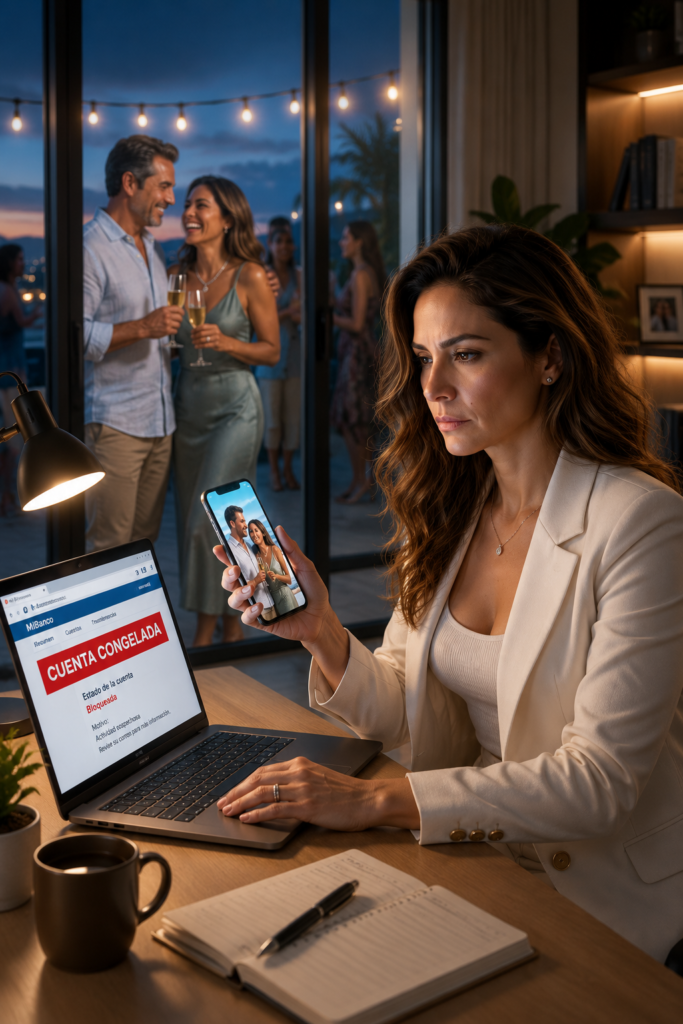
Beneath it was a photo. Arturo stood barefoot in the sand, a champagne glass in hand, wearing a smile that Mariana hadn't seen in years. Beside him was Patricia, her best friend since college, dressed in an expensive white gown and wearing the pearl earrings Mariana had gifted her for her 45th birthday.
Mariana didn’t scream.
She didn’t throw the phone.
She didn’t wake the neighbors in her Coyoacán street.
She simply brought the image closer with two fingers and scrutinized the details: the luxury hotel wristbands, an imported bottle, a designer bag tossed carelessly on a lounge chair, the reflection of an oceanfront suite, and the private yacht in the background.
Then her sadness turned into something else.
Cold.
Exact.
Dangerously clear.
Mariana was a tax accountant at a transportation company in Naucalpan. For over 20 years, she had uncovered inflated invoices, shady partners, ghost companies, and concealed expenses where others saw only boring numbers.
Numbers rarely lied.
People did.
She got out of bed, put on a robe, and walked to her study. She opened the banking app.
Her main card had two additional cards linked to it: one for Arturo and another for Patricia. The latter had been authorized years ago, when Patricia lost her wallet in Mérida and needed to pay for her hotel and flight back.
Mariana never canceled it.
Because Patricia was family.
Or so she thought.
She opened the recent transactions.
Gran Costa Cancun Hotel.
Dinner for two.
Couple’s spa.
Boutique.
Private yacht rental.
Room service.
Another boutique.
Champagne.
More than 180,000 pesos in less than 48 hours.
Mariana felt a hollow ache in her chest, but her hands didn't tremble.
She called the bank.
—I need to cancel all additional cards linked to my account.
—All of them, Mrs. Solís?
—All.
—Would you like to state a reason?
Mariana glanced again at the photo of Arturo and Patricia toasting as if they had won the lottery.
—The authorized users no longer have my authorization.
Then she changed passwords, recovery emails, security questions, and cloud access. She activated two-step verification. She logged out of all open sessions.
Next, she searched for a 24-hour locksmith.
At 3:22, a gray van parked in front of her house. The locksmith, a man with weary hands and a blue cap, looked at the lit windows and then at Mariana.
—Everything okay, boss?
—No —she replied—. But it will be.
He didn’t ask more.
For nearly two hours, the sound of the drill echoed through the house. Front door, garage, patio, study, storage room. Each old lock fell into a cardboard box.
When the man handed her the new keys, he asked:
—Do you want copies?
—No.
—None?
Mariana closed her hand around the cold metal.
—I’ve already made too many copies of my trust.
By dawn, the house looked the same. Arturo’s photos still hung in the living room. Patricia’s favorite mug remained in the cupboard. Arturo’s shoes were next to the couch.
But something had changed.
The house no longer felt abandoned.
It felt reclaimed.
Legally, it had always belonged to Mariana. Her grandmother had helped her buy it six months before she married. Arturo moved in later, furnished it, hung pictures, organized barbecues, and boasted about every corner as if it were his.
But the deed never changed.
At 7:18, loud knocks shook the door.
Mariana peered through the peephole.
There were two police officers.
She opened the door with the chain on.
—Good morning —said the senior officer—. Is Mrs. Mariana Solís here?
—Yes.
—We received a complaint from your husband. He says you denied him access to your residence, canceled shared funds, and are withholding marital property.
Mariana removed the chain and opened the door.
—Come in.
The officers stepped inside. They noted the new locks, the dust on the floor, and the empty boxes on the table.
In the living room, the officer took out a notebook.
—Your husband claims you acted out of spite.
Mariana went to the study and returned with three folders: property, accounts, and investments.
She placed the first on the table.
—The house is solely in my name. It was purchased before the marriage.
The officer reviewed the deed and barely raised his eyebrows.
—So it’s not jointly owned?
—Correct.
The second folder contained account statements, funds, and bank documents.
—The accounts are mine as well. Arturo had additional cards, not joint accounts.
—And what about Patricia Morales? —asked the younger officer.
Mariana let out a dry laugh.
—She was also an authorized user. No longer.
The senior officer closed the folder.
—Do you have any proof of the motive?
Mariana handed them her cellphone.
Both read the message from 2:07. Then they looked at the Cancun photo.
The young officer murmured:
—Wow… that wasn’t mentioned by him.
—How strange, right? —Mariana said.
The officer returned the phone.
—Ma’am, so far we don’t see any crime in changing locks to a property that belongs to you or canceling cards authorized by you.
Mariana nodded.
But when she opened online banking to show she hadn’t emptied any accounts, she saw something she hadn’t noticed before.
A transfer for 85,000 pesos.
Unknown recipient.
Date: 3 weeks prior.
Mariana filtered transactions from the past 12 months.
The screen filled with payments: 42,000, 67,000, 25,000, 98,000, 74,000.
False concepts: “materials,” “consulting,” “advance,” “services.”
The total exceeded 900,000 pesos.
Silence fell in the room.
Mariana breathed slowly.
—I think my husband didn’t just leave with my best friend —she said—. I think he’s been stealing from me for months.
PART 2
The senior officer closed the notebook carefully.
—Mrs. Solís, this no longer seems like a couple's dispute. I recommend you speak with your bank and a lawyer.
Mariana didn’t take her eyes off the screen.
—I know one.
When the police left, she called Laura Beltrán, a financial litigation lawyer she had worked with on various transportation company cases.
Laura answered with a sleepy voice.
—Mariana? Did something happen?
Mariana looked at the Cancun photo, the transfers, and Patricia’s mug in the cupboard.
—Arturo left with Patricia. And I think he paid for their affair with my money.
There was silence on the other end.
Then Laura said:
—Don’t move anything. Don’t delete anything. Don’t download anything without backup. I’m on my way.
At 3 PM, Laura arrived with a black portfolio, a laptop, and a serious expression. She didn’t say “I’m sorry.” Mariana silently thanked her. The last thing she needed was pity.
For hours, they reviewed bank transactions, emails, logins, and account statements. Mariana followed each thread like disarming a bomb.
At 6:40, Laura found the first pattern.
—Look at this.
Three different payments, with three different concepts, ended in the same receiving account.
—Arturo’s account? —Mariana asked.
—No. It’s under a company’s name.
Laura searched the registry.
The company was called PM Integral Consulting.
Mariana felt her blood run cold.
PM.
Patricia Morales.
—It can’t be —she whispered.
Laura kept investigating.
The supposed company had no employees, no real office, and its tax address was an apartment in Del Valle. The rent for that apartment also came from Mariana’s indirect transactions.
Then another charge appeared.
Furniture.
Then another.
Car insurance.
Then another.
Supermarket.
And then one that made her clench her jaw: a jewelry store in Polanco, 38,000 pesos.
Laura looked up.
—The affair didn’t start in Cancun.
Mariana didn’t cry. Not yet.
—Cancun was the announcement.
—Exactly —Laura said—. This had been planned.
Later, an alert appeared in Mariana’s email. Someone attempted to access her cloud from Quintana Roo. The access was blocked because the password had already been changed.
Laura set the mug down on the table.
—They’re looking for something.
Mariana remembered an old file, kept by Arturo’s insistence: a scanned copy of her digital signature, her ID, and proof of address.
—No way —she murmured.
They entered the folder of old documents. There they were: credit applications, service contracts, authorization letters, and a commercial guarantee Mariana had never seen.
Her signature appeared on all of them.
But it wasn’t her original signature.
It was an image pasted.
Laura carefully separated the documents.
—This is already possible fraud, forgery, and unauthorized use of identity.
Mariana closed her eyes.
For the first time, it hurt more to grasp the intelligence of the betrayal than the betrayal itself. Arturo hadn’t just fallen in love with another woman. He had studied her routines, her codes, her silences. He had used trust as a tool.
—What do we do? —she asked.
Laura packed everything into folders.
—Do it right. No shouting. No messages. No answering calls. From now on, anything goes through me.
Mariana’s cellphone started vibrating that same night.
Arturo.
Patricia.
Arturo.
Unknown number.
Message from Patricia:
“You’re going too far, Mariana. One thing is to be hurt and another to ruin our trip.”
Laura read the message and let out a dry laugh.
—What a pretty way of saying “I can’t pay for the hotel with your card anymore.”
Mariana didn’t respond.
The next morning, another message from Arturo arrived:
“This is ridiculous. Reactivate the cards and we’ll talk when I get back.”
Mariana blocked the number.
That Saturday afternoon, a taxi stopped in front of the house in Coyoacán.
Arturo got out first. He no longer looked like the man in the photo. He wore a wrinkled shirt, had several days' worth of beard, and eyes of someone who hadn’t slept.
Patricia got out next, with two large suitcases and a designer bag. The same brand from the boutique charged to Mariana’s card.
They didn’t come back happy.
They weren’t even together.
They came back defeated.
Mariana watched them from the window and called the officer who had left her his number.
Then she opened the door with the chain on.
—What do you need?
Arturo tried to smile.
—Mari, we need to talk.
—No.
Patricia stepped forward.
—You’ve had your tantrum. Let us in.
Mariana looked her up and down. She saw the pearl earrings, the expensive dress, the bag paid for with her money, and that victim expression Patricia always wore when she wanted to get her way.
—Patricia, seriously, I haven’t even started.
Arturo lowered his voice.
—The hotel kicked us out. The cards don’t work. We have no access to money.
—I know.
—Stop saying “I know.”
—I know because I canceled them.
Patricia pressed her lips together.
—You had no right. Arturo is your husband. Half of it belongs to him.
Mariana tilted her head slightly.
—Then his lawyer won’t have a problem proving that.
Arturo lost color.
Mariana took a manila envelope and slid it through the door’s opening.
—This is for you.
Arturo opened it with clumsy hands.
His face changed.
—Divorce petition?
—And a request for measures to protect assets.
Patricia peeked over his shoulder.
—What does that mean?
—That everything linked to my accounts is under review until a judge sees the transactions.
Arturo breathed as if someone had tightened his neck.
—My construction company can’t survive this.
Mariana looked at him without blinking.
—You should’ve thought of that before using my money to pay for your mistress’s apartment.
Patricia turned to him.
—What?
Arturo didn’t answer.
That silence was the first gift Mariana received from the truth.
Patricia took a step back.
—Arturo, you told me that money was from your company.
—Not now —he murmured.
—Was my apartment funded by it?
—Patricia, shut up.
Mariana observed the scene with an odd calm. For years, she had believed Patricia was the woman who stole her husband. In that moment, she understood something dirtier: Patricia had also been a partner, but perhaps she didn't know the full extent of the hole.
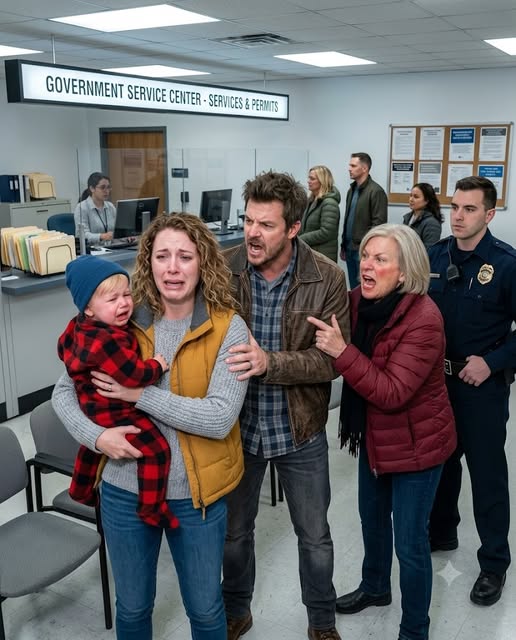
The patrols arrived before Arturo could push the door.
Officer Mendoza approached.
—Mr. Robles, you have already been informed that you cannot enter this property without authorization.
—It’s my house.
—The deed says otherwise.
Arturo glared at Mariana in rage.
—You’re going to regret this.
She held the chain with one hand.
—No, Arturo. The only thing I regret is giving you keys.
A month later, the family hearing was filled with papers, lawyers, and uncomfortable silences. Arturo arrived in a blue suit, trying to look like a respectable businessman. Patricia sat two rows back, pale, makeup-free, and with the pearl earrings hidden God knows where.
Laura presented everything without drama: the message from 2:07, the Cancun photo, the charges, the transfers, the ghost company PM Integral Consulting, the apartment, the IPs, the applications with pasted signatures, and the hidden payments.
Arturo’s lawyer tried to speak about “implied marital agreements.”
Judge Velasco looked up.
—Did Mrs. Solís authorize these transfers in writing?
Arturo swallowed hard.
—No.
—Did he inform you that he was paying personal expenses for Mrs. Morales?
—No.
—Did he use her documents to back credit or contracts?
Arturo looked at his lawyer.
The judge hardened her voice.
—Answer.
—Yes.
Patricia was called next. She walked to the stand as if each step weighed 10 kilos.
—Did you know where the money was coming from? —Laura asked.
Patricia cried before answering.
—At first, no. Then I suspected. Arturo said Mariana didn’t review certain accounts because she trusted him. I… I didn’t ask because it suited me to believe him.
Mariana felt pain.
Not surprise.
The friendship didn’t die in Cancun. It had died much earlier, in every “I didn’t ask,” in every family meal where Patricia hugged her while living off her money, in every fake laugh in the kitchen.
But the strongest twist came when Laura presented a recovered email.
It was from Arturo to Patricia, sent five months earlier.
“As soon as Mariana signs the new credit, we’ll have liquidity. Then I’ll go with you. If she becomes intense, we’ll make her look crazy.”
The room froze.
Mariana looked down.
There it was, the complete truth.
It hadn’t been a stolen passion.
It had been a plan.
The judge ordered immediate measures: the house remained exclusive property of Mariana, the accounts were protected, Arturo had to return identifiable funds, and the documents would be sent to the prosecutor’s office for possible fraud and forgery.
Patricia was also subjected to investigation for economic benefit and possible participation in the shell company.
Arturo sank into the chair.
Mariana didn’t smile.
Justice doesn’t always taste like victory. Sometimes it only tastes like air filling your lungs again after years of living constricted.
The divorce was finalized months later. Arturo lost contracts, sold machinery from his construction company, and was obligated to pay a substantial part of what he stole. The prosecutor's office continued investigating the forged documents.
Patricia first disappeared from Arturo’s life and then from the chats of all their college friends. People didn’t forgive the Cancun photo. They forgave even less the 900,000 pesos.
One afternoon, leaving the courthouse, Arturo caught up to Mariana in the hallway.
—Do you hate me?
She looked at him. He looked older. Smaller. Less dangerous.
—No.
He seemed confused.
—I ruined everything.
—Yes.
—I was an idiot.
Mariana slowly shook her head.
—An idiot forgets to pay the electricity bill. You made decision after decision.
Arturo lowered his head.
—Will you ever forgive me?
Mariana thought of the message from 2:07, of Patricia wearing her earrings, of the cards, of the copied signatures, of the police knocking on her door as if she were the culprit.
Then she thought of her clean house, her new locks, and the afternoon light streaming through the curtains she had chosen herself.
—I’ve already stopped carrying you —she replied—. That’s the only thing I can give you.
She walked away without looking back.
That summer, Mariana changed the house little by little. She donated Arturo’s favorite chair. Gave away the dishes Patricia always praised. Painted the bedroom light blue. In the patio, she planted lavender, bougainvillea, and tomatoes.
With the first restitution payment, she opened a new account called “Life Fund.”
She also started offering free financial education workshops for women going through divorce. The first time a woman told her, “My husband handles everything, and I don’t understand anything,” Mariana recognized that shame.
She sat down with her, opened a bank statement, and taught her line by line.
—Freedom —she said— sometimes starts with a password only you know.
In September, she had a bench built under the tree in the patio. The carpenter asked her what phrase she wanted engraved.
Mariana thought for several days.
In the end, she chose five words:
“She chose herself.”
The first afternoon she sat there, she cried.
Not for Arturo.
Not for Patricia.
She cried for the woman who, at 2:07, received a photo designed to destroy her and responded only:
“Good luck.”
That night, as the sky over Coyoacán turned dark blue, the cellphone vibrated.
Unknown number.
“Can we talk?”
Mariana knew it was Arturo.
For a few seconds, she remembered the woman who would have answered, explained, forgiven, and opened the door.
Then she blocked the number.
The house glowed behind her, warm, silent, safe.
Arturo thought he was leaving with everything.
He never understood that he only took the life Mariana no longer needed.
What he left behind was the only thing truly hers: her house, her name, her peace, and a version of herself that had finally learned to stand by her own side.