PART 1
When Rodrigo called his mother from Hospital Ángeles in Monterrey, Doña Carmen thought she would hear a broken voice filled with happiness, the cries of a newborn in the background, and that clumsy emotion men feel when they become fathers for the first time.
But on the other end, there was only silence.
—Mom… she’s here.
Doña Carmen pressed the phone against her ear and smiled.
—And my granddaughter? How is she?
Rodrigo breathed as if it pained him to answer.
—She was born… without an arm.
Carmen’s smile faded little by little.
—And what of that?
—Mom, you don’t understand.
—No, son. The one who doesn’t understand is you. You’re talking to me like a piece is missing from a Liverpool set.
Rodrigo didn’t respond.
In that moment, Carmen felt a chill in her chest.
She grabbed her bag, ordered a DiDi, and crossed half the city with her rosary in hand, not because she doubted the baby, but because she knew too well her son’s cowardice when things didn’t go as he had planned.
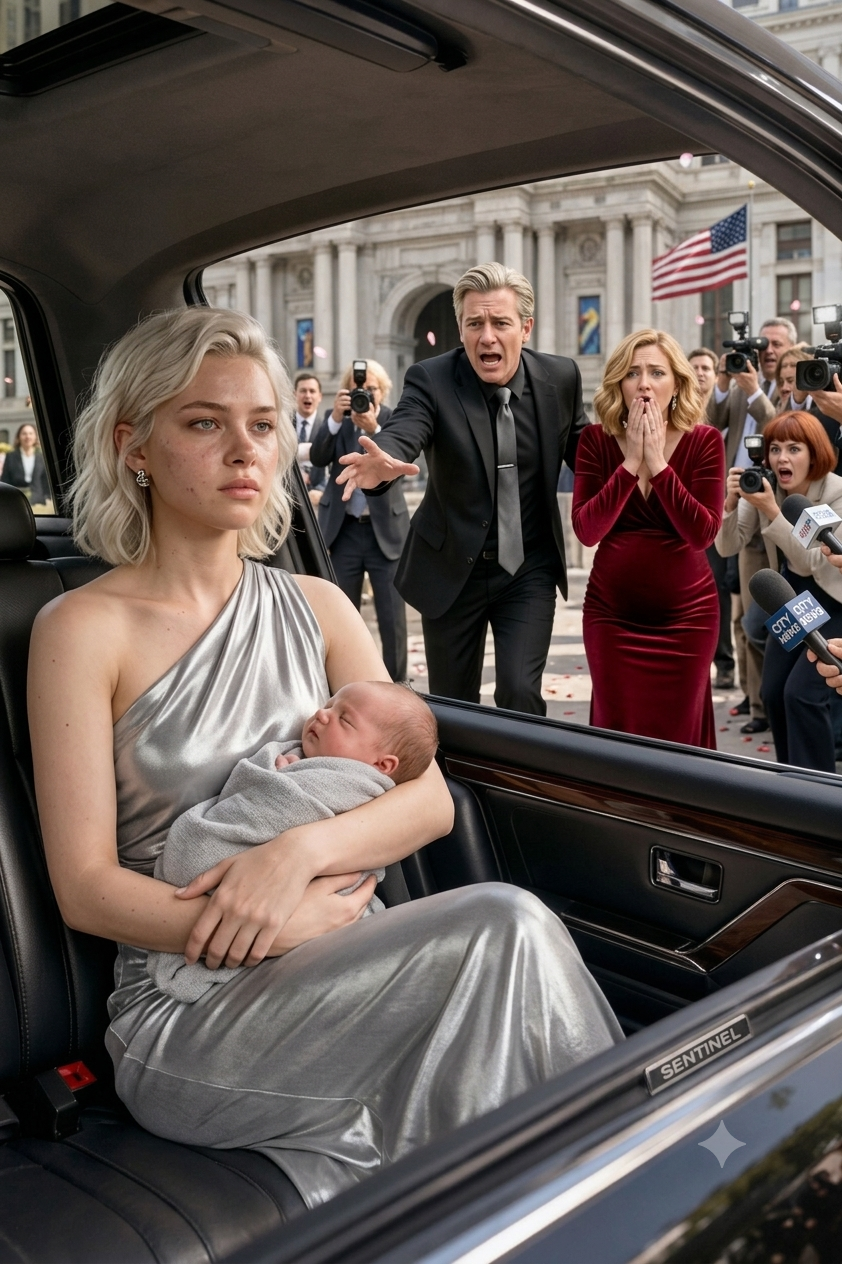
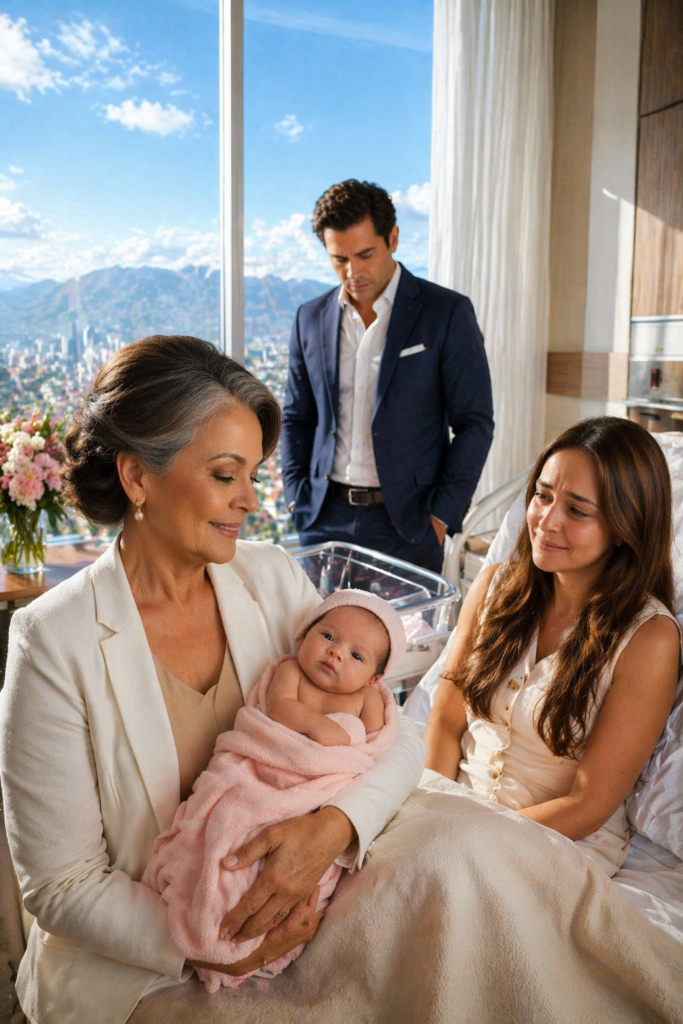
Upon arrival, she found Marisol, her daughter-in-law, pale and crying in bed. Rodrigo stood by the window, his gaze fixed on the buildings of San Pedro, as if there were answers out there.
In the crib lay the baby.
So tiny.
Wrapped in a peach-colored blanket.
With a single fist closed, as if she were already ready to fight against the world.
Doña Carmen approached slowly.
The baby opened her eyes.
She scrunched up her little face.
And let out a fierce little cry.
Carmen smiled.
—Oh, look at this. This girl was born with the spirit of a tax auditor.
Marisol let out a sob.
Rodrigo turned.
—Mom, don’t joke around.
—I’m not joking.
—We’re thinking of putting her up for adoption.
The air grew heavy.
Doña Carmen took a few seconds to understand that her son was speaking seriously.
—What did you say?
Rodrigo ran his hands over his face.
—I don’t want her to suffer. I don’t want her to be looked at strangely. I don’t want to spend my life explaining…
—Explaining what? That your daughter was born and you didn’t have the guts to love her?
Marisol cried louder.
Rodrigo lowered his voice.
—You don’t know what it’s like to carry that.
Carmen carefully lifted the baby. She weighed so little that she felt like a freshly baked sweet bread.
The girl opened her mouth, yawned, and placed her little hand on her grandmother's chest.
Carmen looked at her as one looks at a miracle.
—Is she sick?
—No —Rodrigo murmured.
—Does she breathe well?
—Yes.
—Can she grow?
—Yes.
—Can she laugh, study, fall in love, throw tantrums, and drive you crazy?
Rodrigo clenched his jaw.
—Yes.
Carmen looked at him with hard sadness.
—Then it’s not her who was born incomplete.
Two days later, Rodrigo called her again.
Doña Carmen thought he might have reconsidered.
But her son said in a dry voice:
—We’ve signed. The social worker is coming this afternoon.
Carmen felt the world shatter around her.
She arrived at the hospital before anyone else.
The baby was asleep.
Marisol couldn’t bear to look at her.
Rodrigo held a pen in his trembling hand.
Doña Carmen took the child, pressed her to her chest, and said:
—Tear up those papers.
Rodrigo’s eyes widened.
—Mom, don’t intervene.
She looked him straight in the eye.
—I’m going to intervene to the soul because if you two don’t want to be her parents, I will be her family.
And in that instant, the baby woke up, took Carmen’s finger with her one hand, and wouldn’t let go.
PART 2
The room fell silent.
Marisol closed her eyes as if that phrase had lifted a weight yet at the same time pierced her with a deeper one.
Rodrigo let out a bitter laugh.
—Are you crazy? You’re 61.
—And you’re 29 and already tired of being a dad.
—It’s not fair.
—No, son. What’s unfair is that a girl has to convince her own family that she deserves to stay.
The social worker arrived minutes later. She came with a folder, glasses low on her nose, and a face that had seen too many sad stories.
Carmen sat in front of her with the baby in her arms.
—I want to adopt my granddaughter.
Rodrigo stood up.
—You can’t do that.
The woman looked at him.
—She can start the process. And if both biological parents relinquish custody, direct family will be evaluated.
Marisol opened her eyes.
—Would she stay with you?
Carmen looked at her.
—Not “stay.” I would choose her.
Rodrigo signed without looking at anyone.
Marisol took longer.
Her hand trembled.
Carmen wanted to tell her not to do it, that she could still change her mind, that this girl needed her mother. But Marisol was surrounded by fear, anesthesia, tears, and a family that had spent hours repeating that “a child like that” would ruin her life.
In the end, she signed too.
The baby made a little noise.
Carmen looked down.
—I know, my love. It seems outrageous to me too.
She named her Lucía.
Not because it was pretty.
Not because it was trendy.
But because, according to Doña Carmen, that girl had come to illuminate a house full of shadows.
The first months were tough.
Carmen lived in a quiet neighborhood in Guadalupe, in a one-story house with bougainvilleas at the entrance and a neighbor named Tere who found out everything before the news.
People asked.
Sometimes with tenderness.
Sometimes with morbid curiosity.
—And what happened to the baby?
Carmen always answered the same:
—She was born.
And kept walking.
Lucía grew up amidst songs by Juan Gabriel, chicken broth, therapy, check-ups, laughter, and a grandmother who didn’t treat her as fragile, but as capable.
When she tried to crawl, Carmen wanted to help her.
Lucía got mad and pushed her grandmother’s hand away with her head.
When she learned to eat on her own, she left puree on the wall, on the chair, on the floor, and even in Carmen's hair.
Neighbor Tere said:
—Poor thing.
Lucía threw a spoon at her.
Carmen crossed her arms.
—She’s not a poor thing, she’s got aim.
At 5 years old, Lucía learned to tie her shoes using her teeth and her hand.
At 7, she wrote better than many two-armed kids.
At 9, she fought with a classmate because he called her “one-armed.”
She didn’t hit him.
She just beat him in mental math in front of the whole class and then said:
—Now call me one-armed, but don’t cry.
The teacher called Carmen.
Carmen listened seriously.
Later, on the sidewalk, she told Lucía:
—It’s not okay to humiliate.
Lucía lowered her head.
—He started it.
—Yes. But you ended it like you were a district judge.
Lucía looked at her.
—So what do I do?
Carmen sighed.
—Defend yourself, my girl. But don’t let someone else's cruelty make you cruel.
Lucía never forgot that.
Rodrigo, on the other hand, became a ghost.
He sent money some months.
Then he stopped sending.
On birthdays, he sent cold messages: “I hope she’s well.”
He never said “my daughter.”
He never asked if she liked dinosaurs, if she slept with the light on, if she cried when she fell, if she was scared on the first day of school.
Carmen didn’t speak ill of him.
But she didn’t lie either.
When Lucía turned 12, she found a folder in the closet.
Birth certificate.
Adoption documents.
Signatures.
Dates.
Her name.
Rodrigo’s name.
Marisol’s name.
That night she came into the kitchen with the papers in hand.
Carmen was making flour tortillas.
She froze.
Lucía didn’t cry.
She just asked:
—Did they not want me because of my arm?
Carmen turned off the griddle.
—They didn’t know how to love you because of their fear.
—That’s almost the same thing.
—No, my girl. It’s not the same. But it hurts the same.
Lucía looked at her left arm, the only one, strong from years of learning to do everything.
—Did you love me from the beginning?
Carmen approached and wiped a smudge of flour from her cheek.
—No, Lucía.
The girl tensed.
Carmen smiled tenderly.
—I loved you before I knew your name. When I saw you making an angry face in that crib, I thought: “This girl is going to set the world in order.” And I was right.
Lucía took a deep breath.
Then she hugged her grandmother with her one arm.
Carmen felt that hug was enough to last a lifetime.
Years passed.
Lucía entered high school on a scholarship.
She didn’t want pity.
She hated being congratulated for little things.
—Don’t clap for me for opening a bottle —she would say—. Clap when I win something cool.
And she won.
Robotics competitions.
Debates.
Science fairs.
A national competition where she presented a project for affordable 3D-printed prosthetics for children from rural communities.
When asked why that topic, Lucía answered:
—Because there are children who want a prosthetic and can’t afford it. I don’t need to be completed, but they deserve a choice.
The video went viral on Facebook.
Thousands of people shared the story of the young girl from Monterrey who designed mechanical hands with cheap parts.
Among those people was Rodrigo.
By then he was 45, with a second divorce under his belt, a beard full of gray, and a guilt that couldn’t be washed away with therapy or expensive tequila.
One afternoon he showed up at Carmen’s house.
He didn’t knock.
He stood by the gate, staring at the bougainvilleas.
Lucía saw him from the window.
She was 16.
Wearing sweatpants, a high school hoodie, and her hair up as if she had no time for drama.
—Grandma.
—What’s wrong?
—There’s a sad man outside.
Carmen peeked out.
Her heart jolted.
—His name is Rodrigo.
Lucía took 2 seconds to understand.
—My dad.
Carmen didn’t correct the word.
—Yes.
—What does he want?
—I don’t know.
—Do you want him to come in?
Carmen set her coffee cup down on the table.
—It’s not about what I want. This door is also yours.
Lucía observed Rodrigo.
He looked older than repentant, but sometimes regret aged more than years.
—Let him in.
Carmen opened the door.
Rodrigo lifted his gaze.
—Mom…
—Don’t come crying to me. The person you owe the truth to is inside.
He walked in with awkward steps.
Lucía was sitting at the table, with a notebook full of plans and equations.
Rodrigo swallowed hard.
—Hello, Lucía.
—Hello.
—I am…
—I already know who you are.
The blow was silent.
Rodrigo sat down.
—I don’t know how to start.
Lucía looked at him without hatred, and that destroyed him more.
—With the truth would be fine.
Rodrigo lowered his head.
—I was scared.
—I already know that.
—I thought you would suffer a lot.
—I suffered more knowing that I was let go.
He closed his eyes.
—I was young. I was a coward. They told me I wouldn’t be able to, that your life would be pure pain, that we weren’t prepared.
Lucía rested her only hand on the table.
—Did anyone ask me if I wanted to be switched to another family?
Rodrigo cried.
—No.
—Then they didn’t decide for my good. They decided for their comfort.
Carmen felt a knot in her throat.
Her granddaughter spoke without shouting, but each word fell like a hammer.
Rodrigo wiped his face.
—Do you hate me?
Lucía thought for a few seconds.
—No. Hating you would give you too much space. Honestly, I grew up without missing you.
Rodrigo broke down.
Carmen wanted to intervene, but Lucía looked up at her, calm. She didn’t need rescuing.
—But I can get to know you —she added—. Not because you deserve it yet, but because I deserve to decide with complete information.
Rodrigo nodded as if they had just given him a sentence and a chance at the same time.
From then on, he started coming some Saturdays.
At first, everything was awkward.
He brought conchas, pumpkin empanadas, sometimes flowers for Carmen, and books for Lucía that she had almost always already read.
He washed dishes.
Fixed a leak.
He stayed listening while Lucía talked about sensors, motors, 3D printing, and children who walked 2 hours to get to physical therapy.
One Saturday, Rodrigo saw her adjusting a small mechanical hand.
—Who is it for?
—For a boy from Oaxaca. He’s 8. He wants to be able to hold the handlebars of his bike better.
Rodrigo touched the piece carefully.
—You’re amazing.
Lucía didn’t look up.
—I’m persistent. It’s different.
—Your grandmother did a great job.
—My grandmother did what you couldn’t.
Rodrigo accepted the blow in silence.
And maybe that’s why Lucía started to respect him a little.
Not because he cried.
But because he no longer defended himself.
But Marisol was still missing.
Lucía’s biological mother lived in Saltillo, far away, working in a private clinic. She never remarried. She never had more children.
For 16 years, she had written letters she never sent.
Until she saw Lucía’s video on Facebook.
She saw her smile in front of a children’s prosthetic.
She saw her speak with confidence.
She saw her whole.
And she understood that the greatest punishment hadn’t been losing her daughter, but discovering that her daughter had flourished without her.
One morning she called Carmen.
Her voice sounded shattered.
—Doña Carmen… I need to see her.
They met in a café near the Macroplaza.
Marisol arrived thin, with deep dark circles and an old bag pressed against her chest.
As soon as she sat down, she started crying.
—I didn’t want to give her up.
Carmen froze.
—Marisol…
—I carried her when she was born. For 3 hours. I sang to her. I counted her little fingers. I kissed her forehead. I wanted her.
—Then why did you sign?
Marisol pulled out a napkin and wiped her face.
—Because Rodrigo crumbled. My mom told me that a girl like that would tie me down for life. The doctor talked about therapies, expenses, stares. I had just come out of a cesarean. I was drugged, scared, alone. And everyone talked about her like she was a tragedy. No one asked me if I wanted to be her mom.
Carmen pressed her lips together.
—You could have searched for her later.
—I tried.
She pulled out an envelope.
Inside were copies of returned letters, unanswered messages, receipts for rejected deposits.
Carmen recognized Rodrigo’s handwriting in an old note:
“Don’t confuse her. She already has a life. Don’t show up.”
Rage surged within her like fire.
—That scoundrel never told me.
Marisol trembled.
—I’m not here to take anything from you. You are her real mother. I just… need to ask for forgiveness looking her in the eyes, even if you close the door on me.
Carmen fell silent.
The story suddenly carried another wound.
That night, Carmen placed the envelope in front of Rodrigo.
He read everything.
He turned pale.
Lucía was present.
—Did you hide my mom? —she asked.
Rodrigo didn’t try to lie.
—Yes.
—Why?
—Because I was afraid that she would come back and you would choose her.
Lucía let out a sad laugh.
—You abandoned me and still wanted to control who could love me. How strong, dude.
Rodrigo covered his face.
—I’m sorry.
—Don’t ask me for forgiveness out of habit. Tell me what you’re going to do with the truth.
He lifted his gaze.
—Whatever you decide.
Lucía took a deep breath.
—I want to see her.
Marisol arrived on Sunday.
She stood in front of the door like Rodrigo months before.
When Lucía opened it, they looked at each other without moving.
Marisol brought a hand to her mouth.
—You’re beautiful.
Lucía didn’t smile.
—Are you my mom?
Marisol broke down in tears.
—Yes. And I’m so sorry that I don’t even know how to say it without sounding small.
Lucía swallowed hard.
—When I was born, did you hold me?
—Yes. For 3 hours. I didn’t want to let you go.
—Did I scare you?
—No. You looked at me angry, as if you knew that everyone was acting like fools.
Carmen let out a laugh through her tears.
—That’s true.
Lucía lowered her gaze.
Then she took a step and hugged Marisol with her only arm.
Marisol dissolved into tears.
—I don’t forgive you yet —Lucía whispered—. But I don’t want to live carrying a guilt that isn’t mine.
That was the beginning.
Not a perfect photo.
Not a commercial family.
A twisted, human beginning, full of strange silences, hard questions, and Saturdays where Rodrigo and Marisol learned to sit at the same table without arguing about who had failed more.
A year later, Lucía graduated with the highest GPA in her class.
The auditorium was full.
Carmen wore a navy blue dress and eyes swollen even before the ceremony began. Rodrigo was beside her, serious. Marisol held a bouquet of sunflowers.
Lucía stepped onto the stage.
Took the microphone.
Looked at everyone.
—When I was born, some people thought I was missing an arm.
The auditorium fell silent.
—Over the years, I discovered I was missing nothing. What was in excess was fear in the adults who should have cared for me.
Carmen placed her hand on her chest.
Lucía continued:
—My grandmother taught me that a person isn’t measured by what they lack, but by what they decide to do with what they have. My biological parents taught me another thing: that regret doesn’t erase the damage, but it can force you to stop lying.
Rodrigo cried openly.
Marisol did too.
—We all are born with some difference. Some of us carry it in our body. Others hide it in pride, shame, or fear. The difference is that some are visible from the outside… and others only show when they hurt someone.
The applause started softly.
Then grew.
Lucía waited.
—I’m not an inspiration for having one arm. I’m a young woman who studied, fell, got back up, threw tantrums, won contests, and had a stubborn grandmother who never let me believe I was incomplete.
The auditorium stood up.
Carmen cried like she hadn’t in years.
After the ceremony, Lucía ran to her.
—Grandma.
—Tell me, my girl.
—Do you still believe I was born to outlive us all?
Carmen adjusted her cap.
—No.
Lucía raised an eyebrow.
—Then?
Carmen hugged her.
—I believe you were born to teach us all how to love without counting pieces.
Lucía rested her head on her shoulder.
—Thank you for choosing me.
Carmen kissed her forehead.
—No, my life. Thank you for choosing me too.
Rodrigo and Marisol approached slowly, without invading.
Lucía looked at them.
She didn’t run to them.
She didn’t pretend nothing had happened.
But she made space for them in the photo.
Carmen then understood that justice doesn’t always come with loud punishments.
Sometimes it arrives when the one who was abandoned grows so whole, so free, and so loved, that they can open a door without begging anyone to stay.
Because Lucía was born with one arm.
But it was the others who had to learn, over 17 years, how to truly hold a family together.